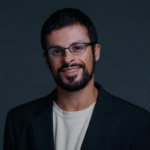


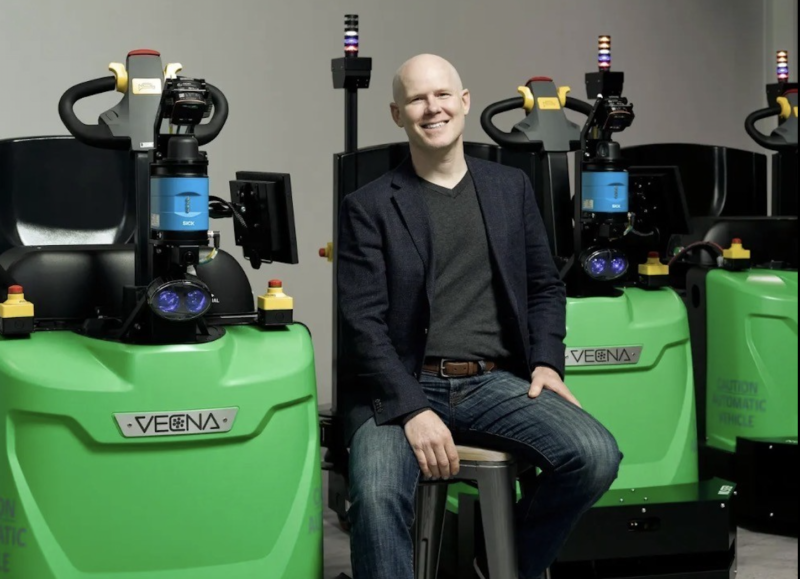
Daniel Theobald has spent his career at the crossroads of engineering, entrepreneurship, and ethics. As founder of Vecna Technologies and MassRobotics, Theobald has become one of the most respected voices in the automation industry. His technical achievements amplify his human-first philosophy in an industry obsessed with machines.
He is quick to remind that robots, at their core, are a means to an end. “Businesses focus on profits, valuations, keeping investors happy,” he said. “But when your employees feel like they’re part of something bigger, that’s when everything starts to click.”
That human-centered focus has guided Theobald from his early days as a researcher to his role leading multiple robotics ventures that have shaped how automation fits into the real world.
Building Robots to Help People
“I wanted to build robots to make the world a better place,” Theobald explained. “We started with healthcare—hospital delivery robots that could take medication from pharmacies up to the wards, freeing nurses to do what they’re best at instead of pushing carts around.”
From there, Vecna expanded its vision. The team built telepresence robots that allowed students who couldn’t attend school in person to “be” in the classroom, rolling up to desks, chatting with friends at recess, and reclaiming a sense of social belonging.
“I’m really proud of how transformative that was for so many people’s lives,” he said. “We built robots for NASA, for the military to rescue soldiers from the battlefield, and for warehouses and factories to automate repetitive, dangerous work.”
The goal for Theobald has always been the same: to empower people. He wants to let the machines do what they’re good at, so humans can focus on what’s uniquely human.
The Hard Truth About Robotics
Robotics is incredibly difficult to deploy according to Theobald. “You can show a robot being successful in a lab one out of a thousand times and catch it on camera, but that doesn’t mean it’s ready for the real world.”
He’s particularly skeptical of the current humanoid robot hype, which he views as more spectacle than substance. “The public sees Hollywood-style videos and assumes robots can fold laundry or cook dinner. We’re nowhere close to that,” he said flatly.
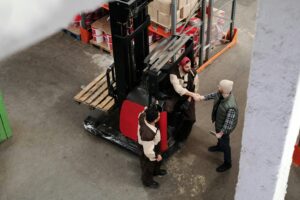
Theobald worries that the industry’s fascination with humanoids, fueled by billions in investment, risks diverting attention from practical automation that’s already working today. “We’ve had robots saving lives, preventing injuries, and boosting productivity for years. They don’t look like humans. They look like autonomous forklifts, robotic arms, or automated guided vehicles. Those are the real robots providing value right now.”
Robotics in Education: Preparing Students for a Tech-Driven World
Jasmine Lawrence Campbell is Product Manager at X, the moonshot factory, where she is deeply involved in The Everyday Robot Project. This innovative initiative aims to develop a groundbreaking learning robot—one with the potential to assist people in their daily lives as they learn and evolve… Continue reading
The Humanoid Bubble
In the foreseeable future, he warns that the technology might works in the lab, but it takes decades to deploy such hardware into the real world. Theobald emphasizes that the idea of humanoids in every home in a few years is just pure fantasy. “When hype gets ahead of reality, it hurts the economy and distracts from the innovations that could actually move society forward,” he warned.
He predicts a major correction ahead due to over-investment in the humanoid space, or “peak investment” as he calls it. “We’ve seen it before with big data, IoT, dot-coms,” he said. “After that comes the hype cycle, then the disillusionment when promises don’t materialize, [which] we’re already seeing that pattern with humanoids.”
Theobald expects the bubble to burst within the next 18 to 24 months, noting that the hype is largely sustained by those with a vested interest. He argues that the investors and startups in that space are the ones pushing the multi-trillion-dollar narrative. “Most of the robotics experts I know are saying the same thing: the tech just isn’t there yet.”
That doesn’t mean he’s anti-humanoid. Far from it. “I built a humanoid robot that was Time Invention of the Year in 2012,” he said, laughing. “There’s a place for them: entertainment, research, even niche industries.”
Realistic Roles for Humanoids
Theobald chuckled. “Honestly, yes—the sex robot industry will probably see the most success in the near term. I’m not joking. There’s clearly a market there.”
He’s not dismissive of the concept itself, but emphasizes practicality over novelty. “There will be a few very specific use cases where a human-like form factor makes sense: entertainment, companionship, or extreme scenarios where human interaction is essential. But for real work? Purpose-built robots will do the job far more effectively.”
The Next 18 Months
Theobald’s realism may sound contrarian in a market saturated with sleek videos of robot dogs and androids performing choreographed routines, but he insists it’s not pessimism but pragmatism.
“Hardware is not software,” he said. “You can’t go viral with a robot the way you can with an app. It takes years of iteration, safety testing, and infrastructure to make physical systems work at scale. People need to understand that.”
He worries that the humanoid hype could stall real progress. “I actually overheard someone at a conference say, ‘We’re going to hold off automating our warehouse because humanoids will do it all soon.’ That’s the absolute wrong move. Meanwhile, their competitors are using proven, practical robots that already work today.”
Purpose Over Pitches
Theobald emphasized a recurring theme: pain. “Starting a robotics company is incredibly difficult,” he stressed. “You need access to machine shops, software engineers, sensor experts, mechanical designers; basically every branch of engineering. Most startups don’t have the resources.”
MassRobotics was Theobald’s solution, creating a shared innovation hub where early-stage robotics companies could access infrastructure, mentorship, and community. “We built it to give startups a fighting chance. To share what we’d learned and help them avoid some of the mistakes we made early on.”
Today, that vision has paid off. MassRobotics has become the heart of Boston’s robotics ecosystem, helping hundreds of companies grow from prototypes to viable products. Soon Theobald will bring that spirit to Silicon Valley, guided by another recurring theme: purpose.
“The real goal isn’t to build robots for the sake of robots,” Theobald said. “It’s to build tools that help people live better lives.” He worries the true danger of hype is that it distracts from solving real problems that actually make a difference. Once that is removed, “the future of robotics will be brighter than any sci-fi fantasy.”