


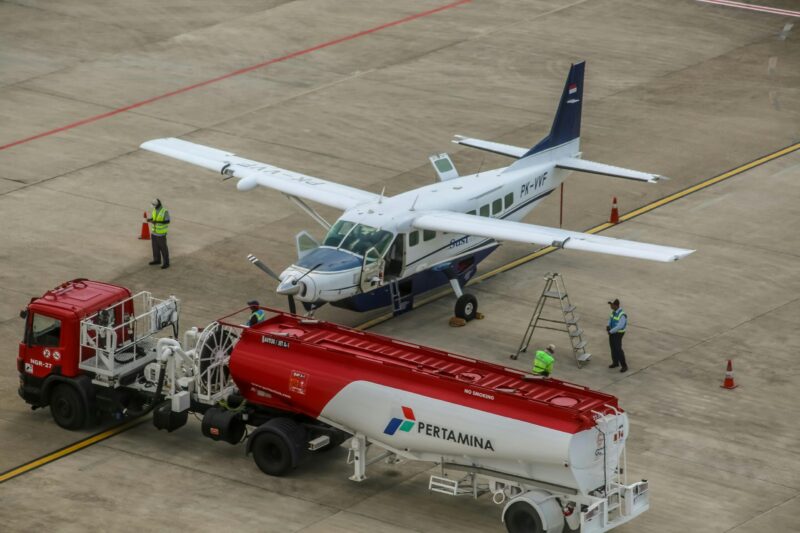
Aviation has long been a symbol of modernity, representing the triumph of engineering over gravity, and the culmination of humanity’s dream to fly. Yet today, global aviation also represents one of the world’s most difficult climate challenges.
Commercial flights account for around 2.5% of annual global CO₂ emissions; but aviation’s overall climatic impact is significantly higher when the effects of contrails and nitrogen oxides are also taken into account. And unlike cars, buses, or trains, which can be converted to batteries or hydrogen fuels, jet engines require fuel, such as kerosine, that packs an enormous amount of power into a small, lightweight volume.
That’s why decarbonizing aviation presents such a daunting challenge for scientists and engineers in our transition to a greener economy. For instance, batteries remain far too heavy for most types of aircraft, and hydrogen fuel would require completely new aircraft designs and worldwide infrastructure to support it.
The Search for Aviation’s Holy Grail of Sustainable Fuel
As climate targets tighten and the aviation industry seeks to meet its own commitments to achieve carbon neutrality by 2050, the race is on to find a realistic alternative for conventional fossil fuels. And until recently the leading contender, and indeed the only near-term solution, was Sustainable Aviation Fuel (SAF).
Sustainable Aviation Fuel, in the broadest sense, isn’t new. Airlines routinely blend standard jet fuels with small quantities of bio-based fuels derived from agricultural residues, used cooking oils, and even municipal waste. And while these blended fuels can reduce overall emissions compared to standard fossil jet fuel, they are by no means sufficient to meet the ambitious emissions targets of the aviation industry.
In its current form, Sustainable Aviation Fuels also face significant limitations. The feedstocks and other sources used to produce bio-based fuels are limited in supply, and airlines must compete with other industries to access them. Moreover, scaling production to meet the huge demands of a global fleet of around 25,000 commercial aircraft is nearly impossible within the framework of existing infrastructure.
However, a new class of fuel is emerging within the SAF category, one that could throw traditional assumptions aside and completely rewrite the script.
Personal Electric Aircraft Take Flight with AIR ONE
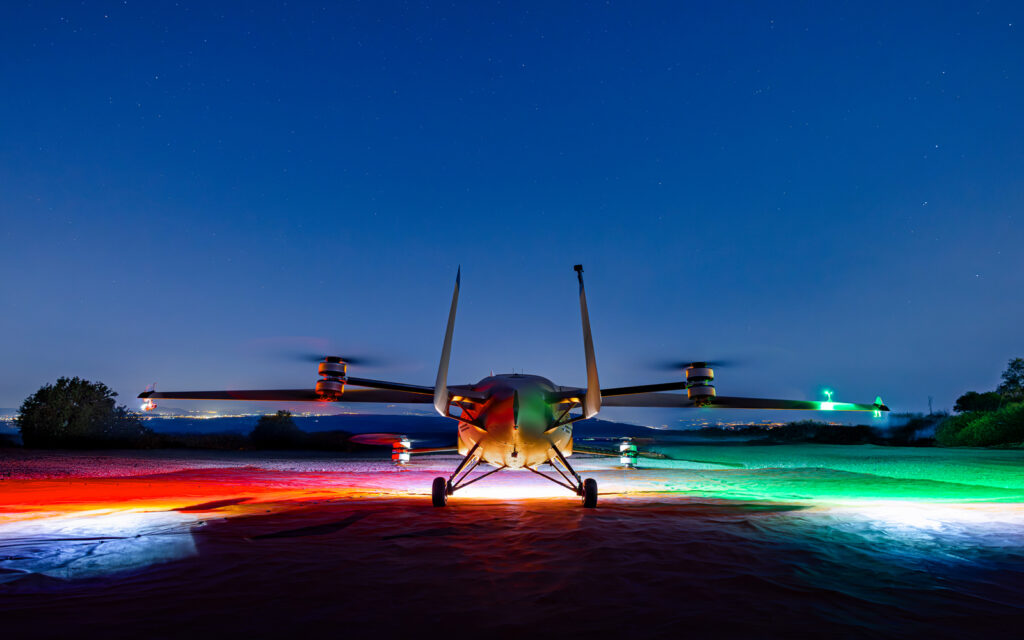
The promise of urban air mobility is closer to reality with each passing day. After a wave of flashy demos and big bets, real progress still feels just out of reach; however, AIR stands apart amidst the noise. The company unveiled a bold, consumer-centric vision at CES 2026, rejecting crowded air taxi plans in favor of… Continue reading
Electro-Synthetic Aviation Fuel (e-SAF)
And that’s where electro-Synthetic Aviation Fuel, or e-SAF, enters the picture. This newly emerging green aviation fuel is created directly from captured carbon and green hydrogen derived from water. And while the chemistry is fairly complex, the fundamental idea is elegantly simple: harvest CO₂ directly from natural biogenic sources, combine it with hydrogen produced from renewable electricity, and synthesize a liquid hydrocarbon fuel that behaves almost exactly like conventional jet fuel.
Crucially, in terms of meeting emissions targets, because the carbon used in e-SAF is already above ground and is captured, directly or indirectly, from the air itself, the fuel can approach near net-zero emissions. And the more renewable power that’s used in the process, the cleaner, and greener, the fuel becomes. This really is a quiet revolution that’s gone almost unnoticed by the wider public.
Against this backdrop, an ambitious Finnish project is on the brink of turning this futuristic vision into a working reality. If these efforts succeed, they will have accomplished what many see as the Holy Grail of Green Aviation.
Turning Forests, Biogas, and Sunlight into Flight Power
In the small city of Espoo, to the west of Helsinki, Liquid Sun, a climate-tech startup, is developing a system that transforms biogenic CO₂ emissions and green hydrogen into a sustainable jet fuel. Finland’s vast forests and strong bio-economy mean that large quantities of biogenic CO₂ emissions are already generated each year through pulp production, forestry residues, and biogas plants. Liquid Sun’s vision is to intercept this CO₂ and use it to produce an efficient, and realistic, green aviation fuel.
Their process hinges on low-temperature electrolysis, a technique that allows the company to combine renewable hydrogen with the captured CO₂ to form hydrocarbons that can be processed into aviation-grade jet fuels. Essentially, by using clean electricity, abundant Scandinavian biomass, and high-tech industrial chemistry, Liquid Sun is in the early stages of manufacturing a jet fuel that is almost carbon-neutral.
Panu Nordlund, co-founder at Liquid Sun, is extremely optimistic about the future of green aviation. “Two decades from now, sustainable aviation fuels will be as normal as renewable electricity is today,” he said.
And having moved from the lab to the production stage, Liquid Sun is already attracting some heavyweight partners. Finnair, ABB, and Fortum have all thrown their support behind Liquid Sun’s exciting pilot project, with their electro-fuel production facility at Espoo going operational in late 2025. Already, Finnair is exploring how the eSAF fuel can be integrated into its long-term decarbonization plan. Meanwhile, ABB is contributing its expertise in electrification technologies, and Fortum is supplying renewable power for the operations.
From Pilot Projects to Policy Changes
Policymakers must support early-stage technologies through subsidies, contracts-for-difference, and develop clear carbon accounting systems. What’s more, airports may need new infrastructure for hydrogen and synthetic fuel synthesis, both of which could benefit from greater support from policy makers and governments. Finally, global standards must be harmonized to ensure consistent measurement of emissions reductions, particularly for fuels produced from biogenic CO₂ capture.
As Panu Nordund makes clear, policy makers need to “lower risks by locking in long-term mandates and incentives so investors, infrastructure funds and banks can commit to funding new fuel technologies and production scale-ups.”
For the first time ever, the concept of carbon-neutral commercial flight is no longer speculative; as we’ve seen, it’s already being produced in pilot facilities, albeit in relatively small quantities. And so contrary to what many once assumed, the next great technological leap forward for commercial aviation is unlikely to come from exotic new engines or advanced types of aerodynamics. Instead, it will probably come from chemistry and the ability to rebuild liquid fuels, molecule by molecule, using renewable power and recycled carbon.
If Liquid Sun’s eSAF technological breakthroughs fulfill their promise, aircraft of the future will fly on fuel created from captured biogenic CO₂ emissions and green hydrogen—closing the carbon loop in a way once thought impossible.