

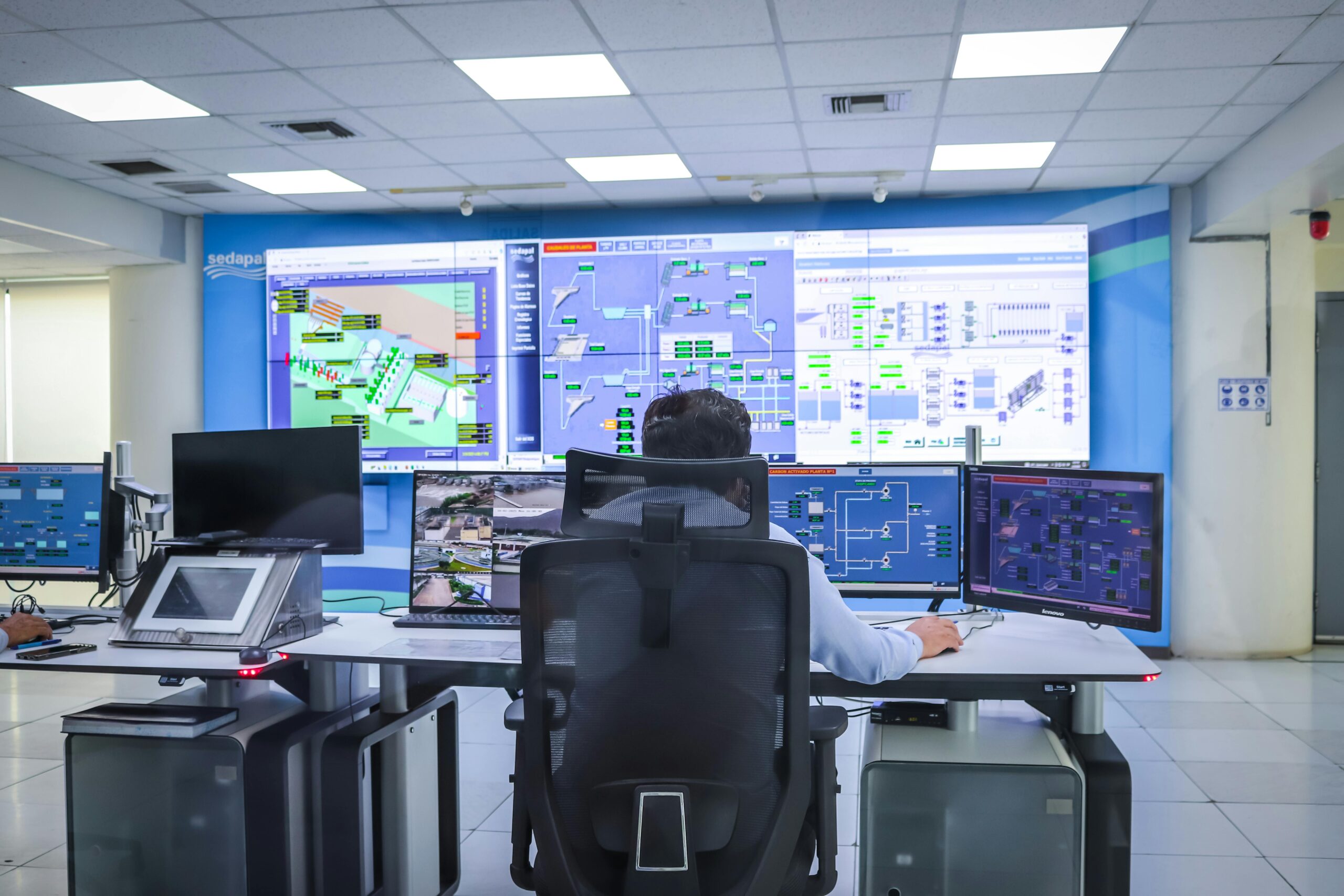
In a move poised to reshape the future of public safety, Iveda and Salience have unveiled the Salience Mobile Command Center powered by Iveda. This is a fully portable, AI-driven hub designed to transform how agencies respond to security and emergency situations. Compact, modular, and powered by advanced artificial intelligence, the new system marks Iveda’s bold entry into the $2.5 billion global mobile command center market.
The technology’s debut took place at the LIV Golf Tournament in Texas, where it demonstrated how surveillance, communications, and AI analytics could operate seamlessly within a single mobile unit. But for David Ly, CEO of Iveda, this represents much more than a new product launch. It’s a paradigm shift in how organizations think about command and control.
“Traditional command centers are not mobile by nature,” Ly explained. “When they are, they’re typically expensive motorhome conversions that require ongoing maintenance, are limited in numbers, and can only be in one location at a time. We changed that equation entirely.”
From Static to Scale
At its core, the Salience Mobile Command Center is built for speed, flexibility, and scalability. Unlike motorhome-style command centers that require fleets of specialized vehicles and constant upkeep, Iveda’s unit is foldable, compact, and deployable in minutes.
“Our units are smaller in size, more affordable, and deployable across multiple strategic areas simultaneously; all while operating as one cohesive system,” said Ly. “We’ve made a mobile command center that’s scalable, affordable, and flexible in ways a traditional solution can’t match.”
According to Ly, a fully operational unit can be deployed in under 15 minutes, including the system’s complete boot-up sequence. The setup doesn’t require specialized training or advanced technical skills, allowing agencies and operators to focus on mission execution instead of logistics.
AI at the Core
The command center’s intelligence comes from Iveda’s proprietary AI engine, which powers features like facial recognition, weapons detection, and real-time threat alerts. With these capabilities, the unit interprets the data to provide actionable insights for teams on the ground.
With that power comes increased responsibility. As public concern grows around surveillance technologies and privacy, Ly emphasizes that ethics and transparency are non-negotiable.
“We approach all of our innovations with transparency and accountability as foundational principles,” he said. “Privacy features are designed directly into the Mobile Command Center and remain compliant with all relevant regulations. AI should never replace human judgment. It’s there to assist, not decide.”
That philosophy aligns with Iveda’s broader mission to ensure AI enhances public safety while respecting civil liberties. “With proper practice and policy,” Ly added, “technology and ethics can advance together.”
The Hidden Cost of AI Latency in Denver

The AI era is here and it constantly demands responsiveness. In Colorado, adoption is rising fast and according to a U.S. Census survey, firms in Colorado lead the nation at 7.4 % in AI use… Continue reading
Beyond Public Safety
While the Salience Mobile Command Center’s most obvious use case is in law enforcement and emergency response, its potential extends far beyond those fields. Ly envisions a future where mobile command technology becomes a universal utility across industries.
“We see potential benefits in mining operations, remote lab work, forestry, retail extensions, mobile health clinics, construction sites, and even temporary shelters or pop-up experiences,” Ly explains. “Once organizations realize they can have a deployable, self-contained command center that sets up in minutes, the use cases multiply.”
This flexibility transforms what was once a niche solution into a cross-industry platform, capable of supporting everything from disaster response to event management and remote medicine. The modular nature of the system allows organizations to configure units for specific operational needs across crowd monitoring, telemedicine, or on-site coordination for large events.
Autonomy on the Horizon
Today’s version of the Salience Mobile Command is innovative, but Iveda’s roadmap suggests an even more autonomous future. The company is already developing enhancements such as self-leveling mechanisms, autonomous mobility, and drone integration.
“We’re focused on three major advancements,” Ly said. “Autonomous drone integration for aerial surveillance, self-leveling and mobility mechanisms so the unit can reposition itself, and global digital twin mapping for synchronized management of multiple units deployed worldwide.”
The goal is to create a globally networked ecosystem of mobile command centers that can be coordinated from a single interface—a “digital twin” command network that provides real-time oversight of operations across continents.
A Global Vision
Though the initial rollout is centered on U.S. public safety agencies, Iveda’s ambitions are international. Large-scale events and disaster zones to medical outreach in remote areas have the same challenges worldwide: coordination, communication, and visibility.
“Everything we design is built with global scalability in mind,” according to Ly. “The challenges we’re solving are universal. Whether it’s event security or temporary infrastructure in disaster zones, the need for mobile, intelligent command systems transcends borders.”
As AI-driven surveillance becomes more sophisticated, Iveda is also setting the standard for responsible use. Ly stresses that technology must evolve alongside robust ethical frameworks.
That commitment to ethical innovation is especially crucial as public institutions and private enterprises grapple with how to deploy AI responsibly in public spaces.
Defining the Future of Safety
Looking ahead, Ly envisions a landscape where mobile command centers are the norm, not the exception. He imagines every police agency having multiple units, every large-scale construction project deploying one for oversight, and every hospital system using them to extend tele-health capabilities into rural areas.
“We see a world where mobile command becomes the default,” Ly stated. “When every major event, construction project, and city service is supported by deployable technology like this, we’ll know we’ve succeeded.”
For Iveda and Salience, this launch signifies the future of connected infrastructure, AI-enabled decision-making, and adaptive operations. As urban environments grow more complex and emergencies demand faster, smarter responses, technologies like the Salience Mobile Command Center will become indispensable.