

In a world racing toward electrification, batteries have quietly become one of the most consequential and problematic technologies of our time. From lithium shortages and cobalt mining controversies to fires, toxic waste, and ballooning carbon footprints, today’s dominant battery chemistries are struggling to keep pace with the values of a climate-conscious future. Flint, a company proposing something that sounds almost implausible at first glance, has adapted high-performance batteries made primarily from paper.
At the center of this ambition is CEO Carlo Charles, whose personal story and technical persistence have shaped Flint’s unconventional approach. What began as curiosity-driven tinkering has evolved into a commercial-scale effort to rethink energy storage materials using cellulose instead of lithium, water instead of toxic solvents, and compostability instead of landfill permanence.

A Climate-Driven Origin Story
Charles’ path to battery innovation didn’t start in a Silicon Valley lab. It began in the Philippines, a country acutely vulnerable to climate disasters. Growing up amid floods, storms, and power instability left a lasting impression. Energy access and the environmental costs tied to it became a lived experience.
That awareness carried into years of experimentation and collaboration, including work with organizations like Google, the U.S. Air Force, and various international embassies. Over time, one challenge kept resurfacing: batteries. They were essential, expensive, dangerous when mishandled, and environmentally destructive at scale. Flint was born from the conviction that batteries needed reinvention instead of incremental improvements.
Rewriting the Rules on Energy Storage
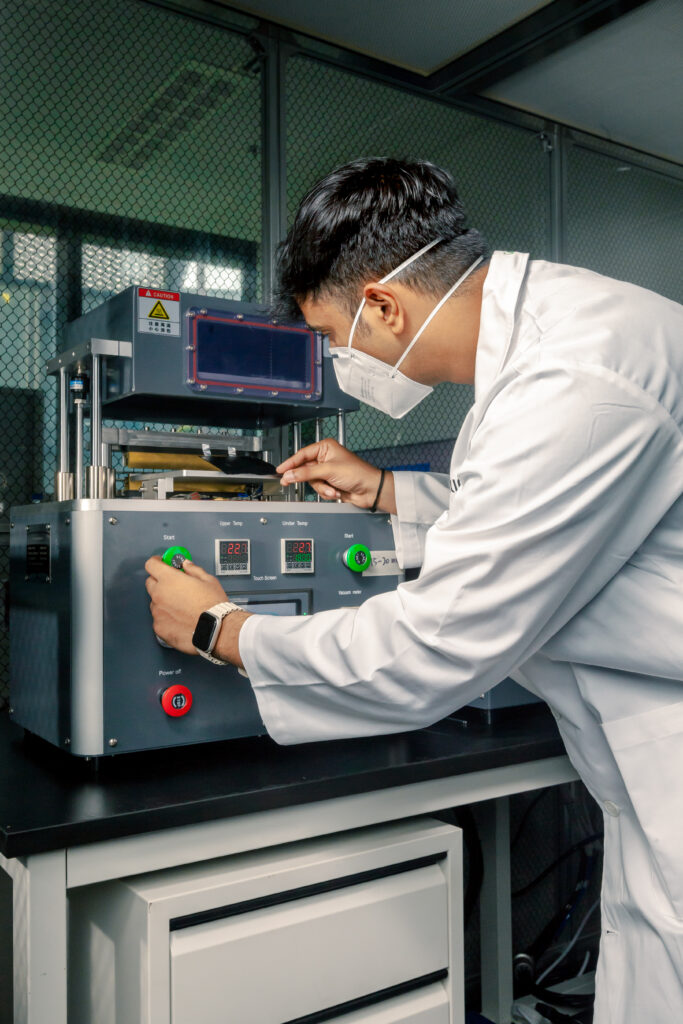
Flint’s core innovation lies in something deceptively simple. Traditional batteries rely on multiple distinct components: a separator, an electrolyte, an anode, and a cathode often made from different metals and chemicals. Flint combined the separator and electrolyte into a single, cellulose-based material derived from plants and agricultural waste.
This design delivers several advantages at once. It dramatically slows dendrite formation, a common cause of battery failure and fires. It eliminates the need for organic solvents and PFAS chemicals. It even improves safety because Flint’s batteries are non-toxic, leak-proof, fire-resistant, and non-explosive even when punctured or damaged.
Performance hasn’t been sacrificed in the process. Flint’s current cells achieve an energy density of roughly 226 Wh/kg, placing them squarely within the competitive range for many consumer and industrial applications. They also support around 1,000 recharge cycles while retaining 80% of capacity which is enough to power devices reliably for six to seven years under typical use.
Designed for the End of Life
Perhaps most striking is what happens after a Flint battery’s useful life ends. Once removed from its casing and exposed to soil, water, or sunlight, the cellulose-based components naturally break down. Unlike lithium-ion batteries which are difficult and costly to recycle, Flint’s chemistry is fully compostable.
Early life-cycle analyses suggest this approach can reduce carbon footprint by as much as 90% compared to conventional lithium-ion batteries. The reasons are structural: local sourcing of cellulose, lower-temperature manufacturing, fewer hazardous inputs, and a radically simplified end-of-life pathway.
“Recyclable” has long been the industry’s gold standard. Flint is aiming higher toward batteries that don’t need recycling infrastructure at all.
New Off-Grid Fridge Tech Keeps Food Fresh for Up to Five Days Without Power
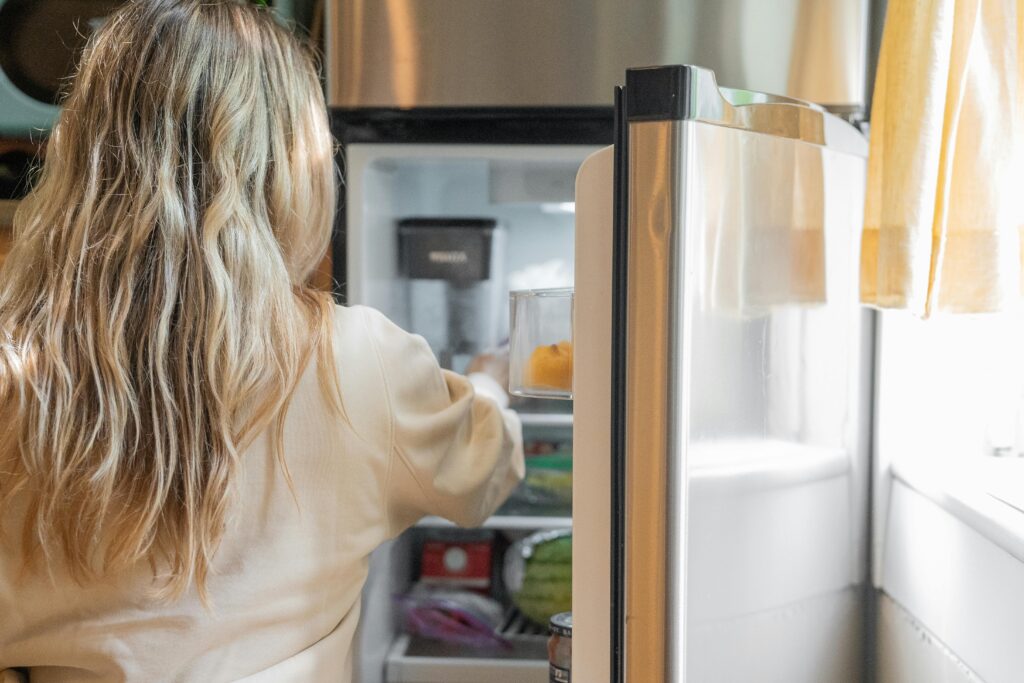
When the grid goes dark, most refrigerators warm quickly, and food safety becomes a countdown. New solar-powered refrigeration technologies are changing that equation, offering systems that stay cold for days even with limited sunlight… Continue reading
Recognition and Momentum
That vision is starting to resonate. Flint has earned major industry recognition, including awards from TechRadar and CNET, validating both the technical credibility and market relevance of its approach. Coverage across outlets like TechCrunch, Wired, and The New York Times has further amplified its visibility, helping shift paper batteries from curiosity to contender.
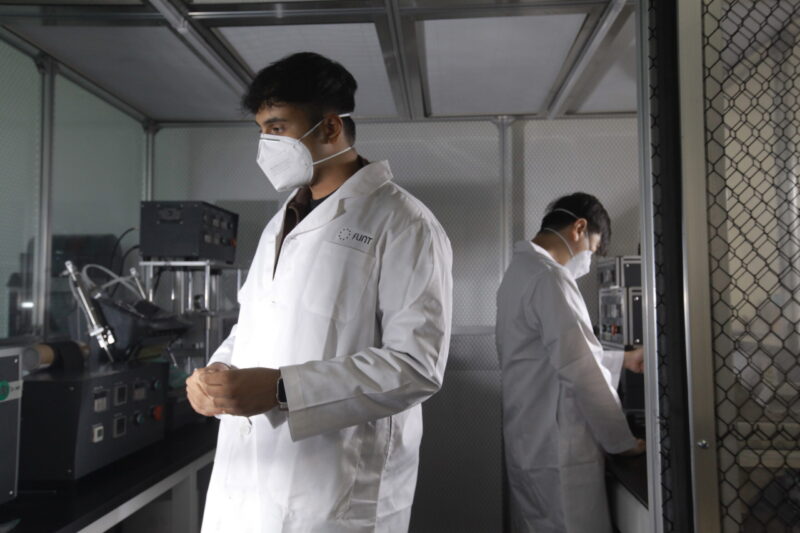
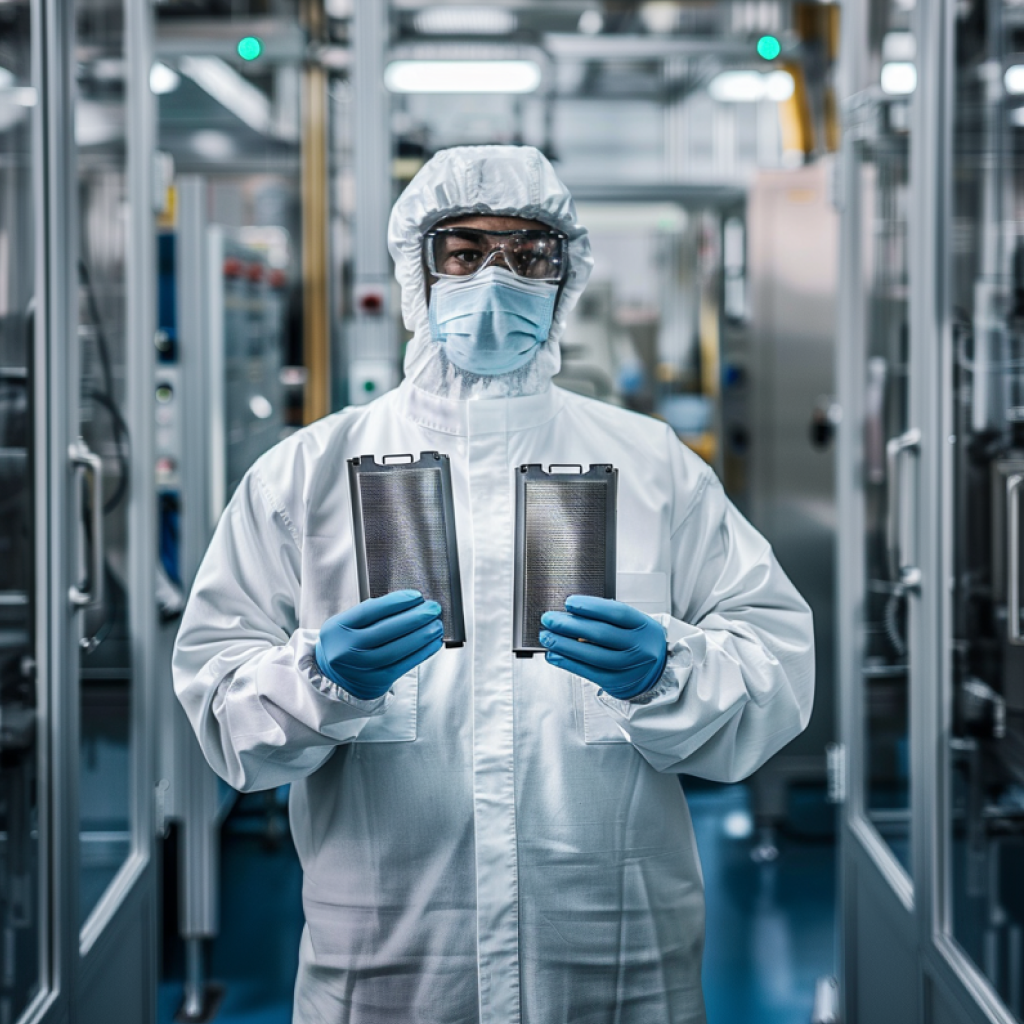
Behind the headlines, Flint has quietly built real manufacturing capability. The company currently produces up to five million batteries per year from its Singapore operations and is preparing a significant expansion into Europe through a major contract manufacturer, targeting capacity of up to 300 million units annually.
Why Start with Disposable Batteries?
While Flint’s long-term ambitions include electric vehicles and grid-scale storage, its near-term strategy is deliberately pragmatic. The company is prioritizing single-use and low-drain applications like AA and AAA batteries for remotes, event wristbands, sensors, and basic medical devices. This will prove critical where ecological urgency and volume demand intersect.
Disposable batteries are a massive, under-scrutinized waste problem. Billions are produced each year, most ending up in landfills. By replacing them with compostable alternatives that don’t rely on lithium, cobalt, or nickel, Flint can deliver immediate climate impact while refining its manufacturing processes at scale.
Medical devices and wearables represent another promising frontier. Safety and reliability are paramount in these categories, and Flint’s non-toxic, fire-resistant chemistry offers a compelling advantage.
Scaling Without a Green Premium
One of Flint’s most disruptive commitments are namly economic rather than technical as they are refusing to charge a green premium. Charles is adamant that sustainability must compete on cost, not sentiment. Today, Flint’s batteries are already priced competitively with conventional options, and the company expects unit economics to improve further as production scales.
This cost parity is enabled by cellulose itself, one of the most abundant organic materials on Earth. Flint sources it from plants, agricultural byproducts, and even invasive species, opening the door to localized supply chains and new value streams for waste materials. In contrast to the geopolitically fraught supply chains of lithium and cobalt, cellulose is everywhere.
From Proof to Power
Scaling novel hardware is never easy. Achieving consistent quality across millions of units required Flint to build specialized infrastructure and partner with seasoned manufacturing teams. Funding has also been lean by industry standards: a $2 million seed round followed their pre-Series A. Yet those constraints appear to have sharpened focus rather than slowed progress.
Looking forward, Flint is investing heavily in R&D to push energy density and cycle life further which are critical steps toward eventually addressing EVs, grid storage, and lead-acid battery replacements. Europe’s impending PFAS bans could also accelerate adoption, positioning Flint’s PFAS-free chemistry as a regulatory-ready alternative.
Perhaps the most telling indicator of Flint’s trajectory is cultural. Its team draws from biotech, coatings, sensors, and manufacturing rather than traditional battery backgrounds. That diversity, Charles believes, is precisely why the company has been able to challenge assumptions others took for granted.
In the race to decarbonize the planet, batteries will either be part of the problem or part of the solution. Flint is betting that paper, of all things, might help tip the balance.