



Dr. Tyler Evans is an infectious diseases and public health expert who has been on the front lines of major disease outbreaks (including two Ebola outbreaks) around the globe. Outside the U.S., he has mostly worked in sub-Saharan Africa, South Asia, and the Middle East with organizations like Doctors without Borders and Partners in Health. He is a champion for medical humanitarianism and health equity who aims to depoliticize public health to protect all communities worldwide.
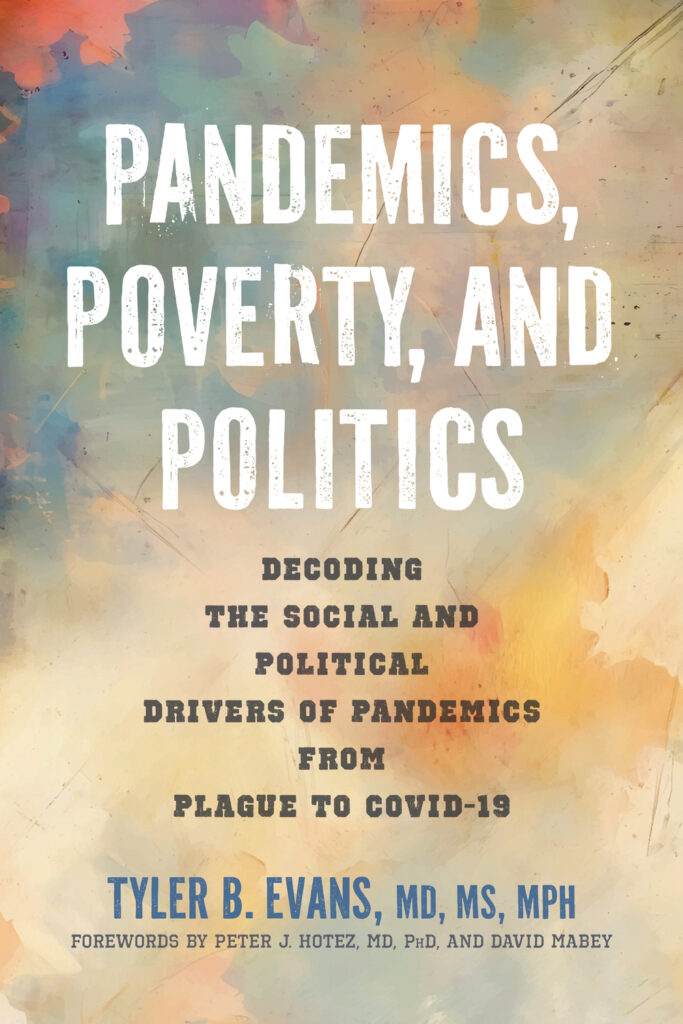
Innovation & Tech Today sat down with Dr. Evans to discuss how political decisions significantly shape public health outcomes, and the misconstrued public perception of mRNA vaccines. Dr. Evans explained ways that misinformation fosters public distrust in health authorities and emerging science. His upcoming book Pandemics, Poverty, and Politics examines how socio-political factors like inequality and poverty exacerbate pandemics. It unravels the complex web of social, political, and economic factors driving pandemics and other health crises.
Innovation & Tech Today: How do mRNA vaccines work?
Tyler Evans: Think of mRNA as a single-use blueprint your body reads and then shreds. Encased in tiny lipid bubbles, the mRNA slips into your cells and is translated in the cytoplasm into a harmless piece of the virus, often part of the spike protein. Your immune system studies that piece, creates antibodies, and trains T cells to find and destroy the real thing later. It never enters the nucleus and it never touches your DNA. The body clears the mRNA within hours to days, but the immune “memory” remains and that is what ultimately responds to microbial invaders, and ultimately saves lives. Public health at its best turns complex biology into simple access and trust. We need more of that.
In Limitless: Live Better Now, Chris Hemsworth Explores Methodical Exposure to Pain

In episode 2, titled “Pain”, hospice and palliative medicine physician BJ Miller took real care so that anything Chris had to endure was shy of toxic or injurious as they dialed up the intensity of the pain. Continue reading
I&TT: Why are mRNA vaccines the single best technology to rapidly produce a vaccine for the largest number of people?
TE: Speed, specificity and scalability. With mRNA, once scientists have the genetic sequence, design takes days, not months. Manufacturing is cell free and standardized. You swap in a new sequence on the same production line, then scale quickly without ever growing live virus. That agility is exactly what a fast moving outbreak demands. This is why the COVID-19 vaccines were able to be so quickly developed with record backing effectiveness. Remember Operation Warp Speed? That was mRNA technology. The platform also updates efficiently and specifically when a pathogen evolves, which means we can keep protection aligned with reality on the ground. There is rarely any mismatching, which may happen with other vaccines, where they may not perfectly pick up on the invading microbe. Specificity=effectiveness. In a crisis, speed and effectiveness is not a luxury. It is the difference between a controlled surge and a system that buckles for everyone.
I&TT How have the COVID-19 variants made mRNA research more difficult?
TE: Variants keep changing the target. Mutations in the spike protein can blunt how well existing antibodies recognize the virus. That forces teams to run continuous genomic surveillance, test neutralization in the lab, and then push updated designs through manufacturing without losing time. Regulators have created faster paths for strain updates, which helps. What complicates everything is the cadence of change. When a virus evolves faster than expected, science has to move at the speed of trust and data. If trust wobbles, uptake lags, and the best vaccine cannot deliver population impact.
I&TT: How do you respond to the claim that mRNA vaccines don’t perform well against viruses that infect the upper respiratory tract?
TE: This is fundamentally untrue. COVID-19 is an upper respiratory infection (URI) and the effectiveness of the COVID-19 mRNA vaccines were greater than 90%. Respiratory viruses enter through the nose and throat, where mucosal immunity and IgA antibodies matter more than the IgG response in blood. Systemic vaccines rarely provide sterilizing protection in those tissues. What mRNA vaccines do consistently is keep people out of ICUs and morgues by preventing severe disease. That is a huge public health win. Next, watch the intranasal and mucosal strategies, including intranasal mRNA candidates and heterologous prime boost approaches. Those aim to shore up immunity right where these viruses first land. We should judge vaccines by the outcomes that matter most, starting with lives saved.
I&TT: How has antigenic drift (accumulation of small, immune-evading mutations over time) challenged mRNA efficacy?
TE: Drift is the viral equivalent of changing outfits over and over. Small mutations reshape parts of the protein your antibodies recognize. Over time the match weakens. The advantage with mRNA is how fast we can update. You identify the new sequence, drop it into the same platform, validate, and scale. Updates can be monovalent or multivalent to cover what is circulating now and what is rising. The science is the easy part. The hard part is keeping communication clear and depoliticized so people actually receive the updated protection. Public health (just like the science engineering it) should be depoliticized.
I&TT: How do you counter the argument that mRNA only codes for a single antigen and that after one mutation, the vaccine becomes ineffective?
TE: Immunity does not hinge on one pixel. The immune system targets many epitopes across the antigen and recruits T cells that recognize conserved regions that do not mutate easily. A single change rarely erases protection. Some mutations reduce neutralization, which is why boosters and updated formulations matter. And mRNA is not limited to one antigen. We can encode multiple antigens or variant spikes in a single shot to broaden coverage. The platform exists to move fast, stay flexible, and keep the edge over evolution. The real vulnerability is not scientific. It is when misinformation outpaces communication and turns a solvable problem into a preventable tragedy.