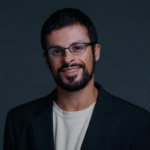


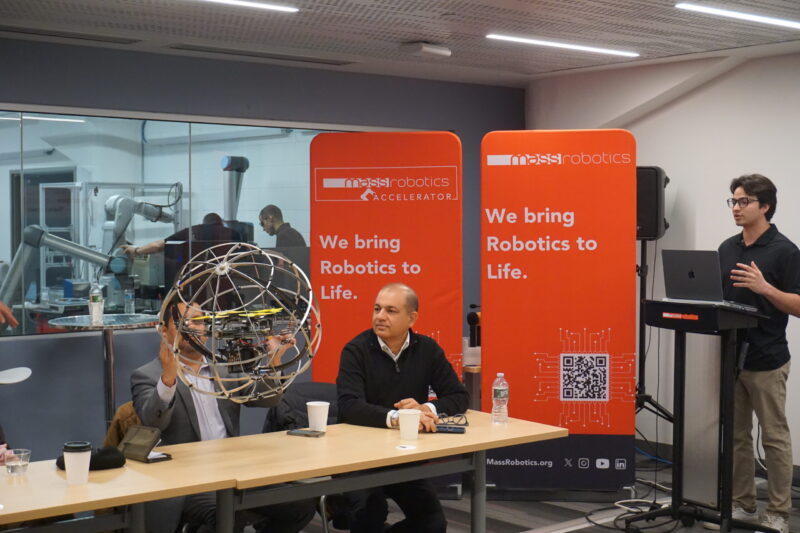
Daniel Theobald co-founded MassRobotics in 2015, but he wasn’t trying to create the world’s largest robotics innovation hub. He was trying to fix a structural problem that threatened to slow the entire automation revolution.
At the time, Theobald was leading Vecna Technologies, already well-known for its autonomous systems and humanitarian robotics work in battlefields. While driving innovation within his own company, he kept running into the same industry-wide bottleneck: promising robotics startups were struggling because the barriers to entry were impossibly high.
“Most robotics founders had to build everything from scratch. Physical labs, machine shops, test floors, all of it,” Theobald recalled. “And they were doing it in silos. Robotics is too complex for that. We needed a place where collaboration wasn’t just possible, it was built in.”
That idea of shared space, shared tools, shared knowledge has since transformed Boston into the densest robotics cluster on Earth. Early inspirations include robotics legend Rodney Brooks, co-founder of iRobot, Rethink Robotics and now Robust.AI, whose career has had a significant impact on modern automation. His belief in open collaboration, modular design, and practical deployment helped influence the ethos on which MassRobotics was built.
“Rodney has always pushed the idea that robots have to leave the lab,” Theobald said. “MassRobotics was designed to help them do exactly that.”
A Platform for Discovery and Deployment
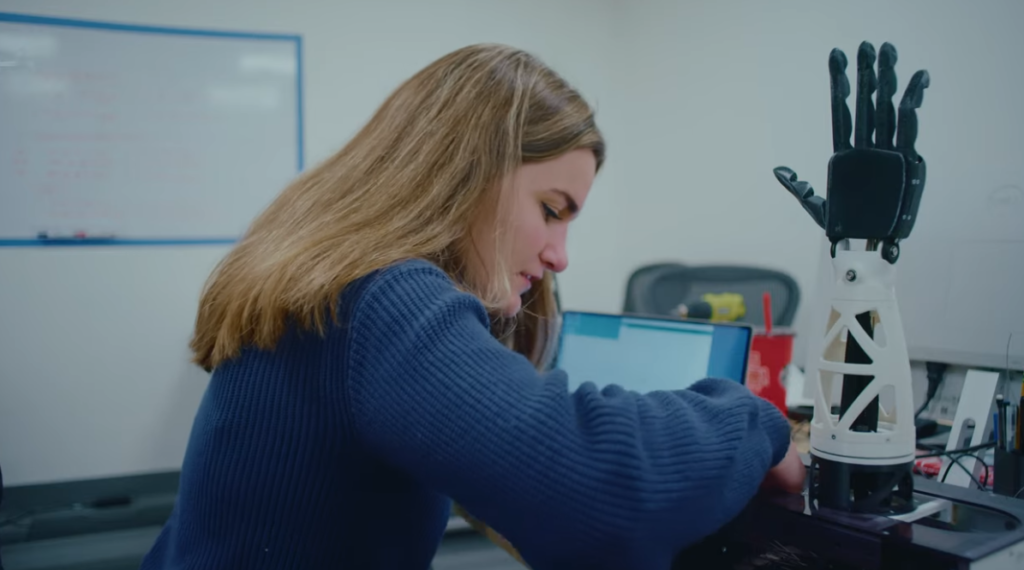
Unlike many tech incubators, MassRobotics isn’t focused solely on invention but also on deployment. The organization gives startups access to equipment, multi-vendor testbeds, logistics environments, and corporate partners who can validate their solutions in the real world.
“Robotics isn’t software. You can’t build something on a laptop and ship it to a million users,” Theobald explained. “Robotics requires space, hardware, interoperability, and a place where mistakes don’t cost millions. That’s why MassRobotics works.”
More than 500 robotics companies now operate in Massachusetts, with over 250 directly tied to the MassRobotics ecosystem. From warehouse automation startups and drone innovators to surgical robotics pioneers, many have moved from prototype to deployment specifically because they had a home where testing and iteration were accessible.
Brooks’ influence shows up here, too. His long-standing belief that robotics innovation is meaningless unless it reaches actual users underpins MassRobotics’ approach.
“Rodney taught an entire generation of engineers that robots need to solve real problems for real people,” Theobald noted. “MassRobotics applies that lesson every day.”
The Reality of the Humanoid Hype
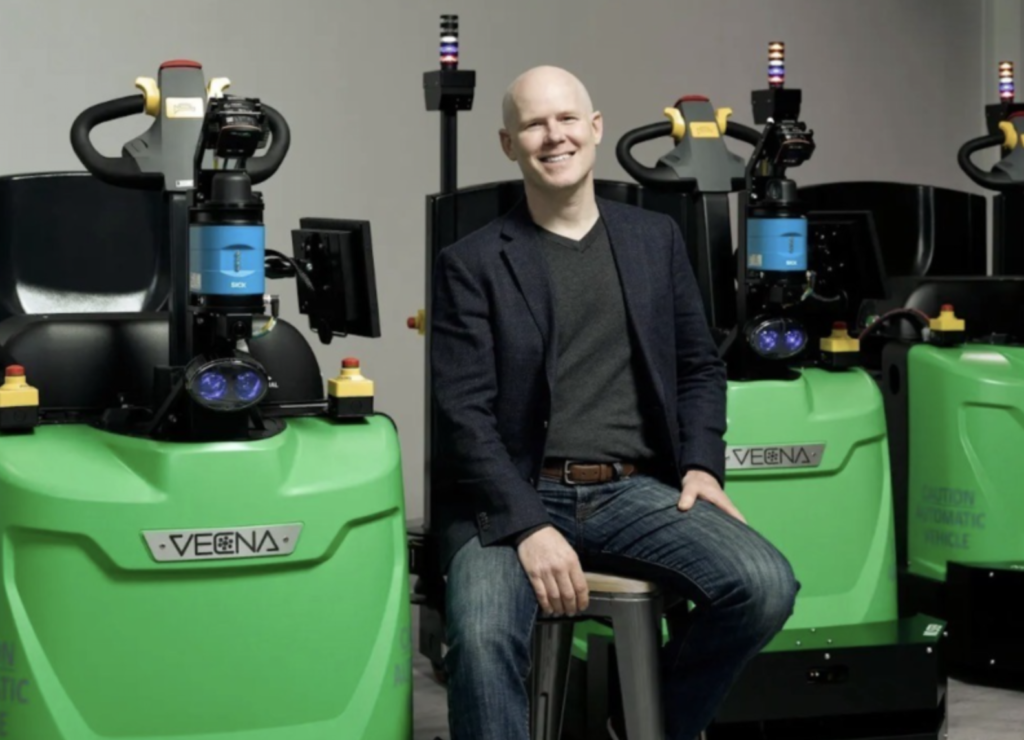
Daniel Theobald has spent his career at the crossroads of engineering, entrepreneurship, and ethics. As founder of Vecna Technologies and MassRobotics, Theobald has become one of the most respected voices in the automation industry… Continue reading
Building Industry Beyond Companies
MassRobotics’ impact goes far beyond the startups it houses. It has helped reshape the architecture of the global robotics sector itself.
In 2022, the organization led an unprecedented collaboration between competitors—Vecna Robotics, OTTO Motors, Locus Robotics, and more—to create the first multi-vendor interoperability standard for autonomous mobile robots. Before this breakthrough, robots from different manufacturers couldn’t reliably coexist in the same warehouse. Deployment at scale was messy, expensive, and risky.
The MassRobotics standard changed that, and it’s now being adopted by major logistics providers and recognized by international standards bodies.
“Interoperability was one of the biggest barriers to deployment,” Theobald said. “Customers want robotics fleets that work together, not a technological zoo.”
This focus on shared standards echoes Brooks’ own legacy. His pioneering work in modular robotics, collaborative systems, and human-safe robotics helped establish several of the principles the industry relies on today. namely that robotic fleets can work with people, as well as each other.
Educating the Future Workforce
Technology alone can’t accelerate deployment, people need to be ready for it. That’s why MassRobotics has invested heavily in building the next generation of engineering talent and ensuring that robotics remains accessible to everyone.
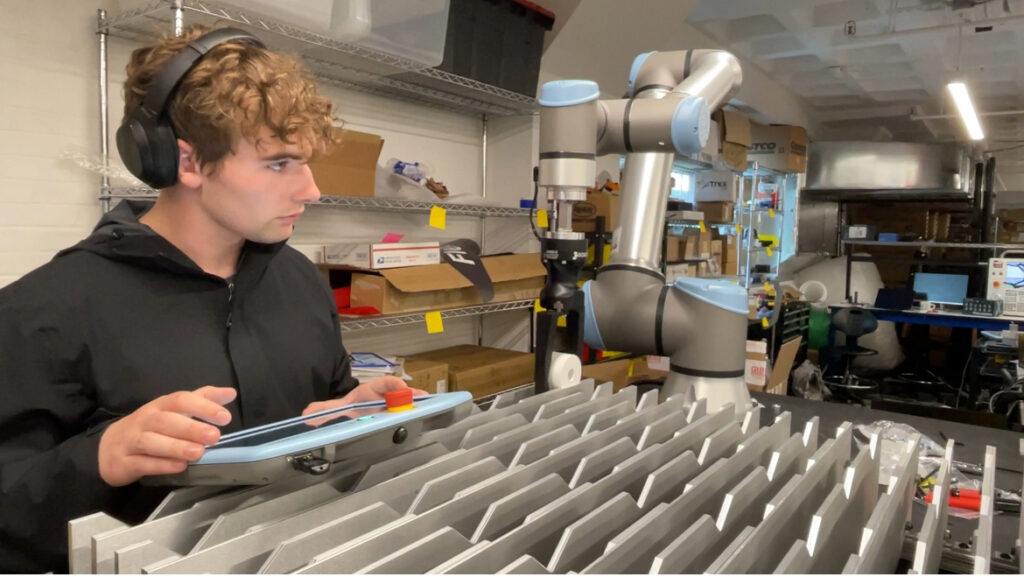
Programs like Jumpstart Fellowship introduce high school girls from Boston’s underserved communities to engineering, robotics, and coding. Hands-on collaborations with universities give students access to advanced robotics systems long before graduation. Corporate internships provide pathways into real careers.
“The skills gap is real,” said Theobald. “If we want robots deployed safely and effectively, we need technicians, programmers, operators, and designers who understand the technology. MassRobotics is making that pipeline a reality.”
Robotics with a Moral Compass
As automation scales rapidly, Theobald is increasingly outspoken about the ethics of robotics deployment. He believes that robots should make work safer, more meaningful, and more human, not eliminate livelihoods or prioritize speed over safety.
“We shouldn’t have people driving forklifts in dangerous environments,” he emphasized. “Robots can prevent injuries, reduce burnout, and take on tasks humans shouldn’t be doing. Automation’s goal should be to elevate people, not replace them.”
This aligns, in part, with Brooks’ long-held view that robotics should extend human capabilities and dignity rather than diminish them.
Theobald believes the industry needs to move away from shareholder-first thinking and toward a founder-led, responsibility-driven mindset. The responsibility of building robots carries the weight of shaping the future of work.
Expanding the Model Worldwide
MassRobotics has become a global template for building thriving robotics ecosystems. Delegations from Europe, Asia, the Middle East, and Latin America visit regularly, hoping to replicate the energy of Boston’s cluster.
Many governments are now building “MassRobotics-style hubs” to accelerate their own robotics economies. “Robotics is not a zero-sum game,” Theobald explained. “When one region gets stronger, the whole industry benefits. The robotics revolution will be global, and collaboration is how we get there.”
Nearly a decade after its founding, MassRobotics is expanding again with more labs, more testing space, more startups, more partnerships. Yet the mission remains the same: help robotics companies leave the lab, scale into the world, and improve lives.
“We’re just getting started,” Theobald quipped. “Robotics is entering its deployment era. MassRobotics exists to make sure the technology gets out there safely, effectively, and for the benefit of everyone.”
With leaders like Daniel Theobald driving industry-wide collaboration, MassRobotics is poised as the launchpad for the next decade of global robotics deployment.