

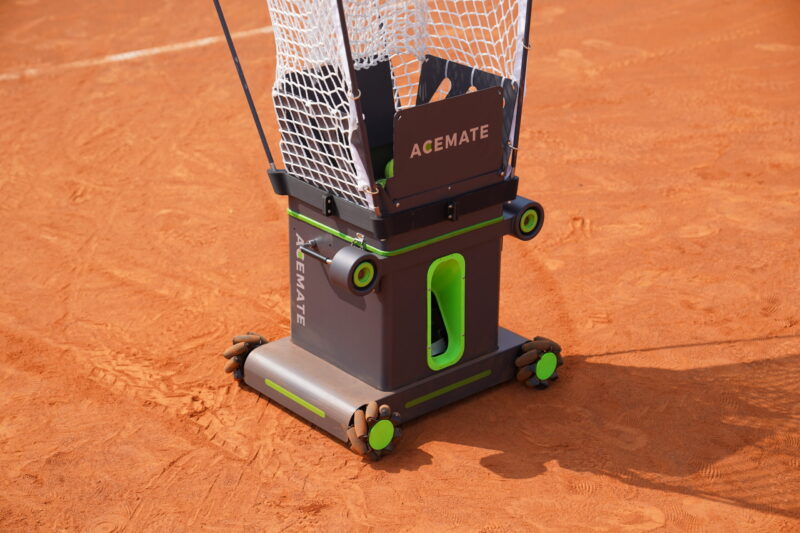
Tennis players know this frustration: you want a quality rally, then your partner cancels. The ball machine feeds the same predictable shot. The rhythm dies. Technology has tried for decades to solve this problem. The Acemate Tennis Robot is one of the first systems that genuinely feels like it understands the game.
As a player of more than 30 years and a coach working with students of all ages, I found there is something far superior about this ball launcher. It is an interactive training partner.
Mobility Changes Everything
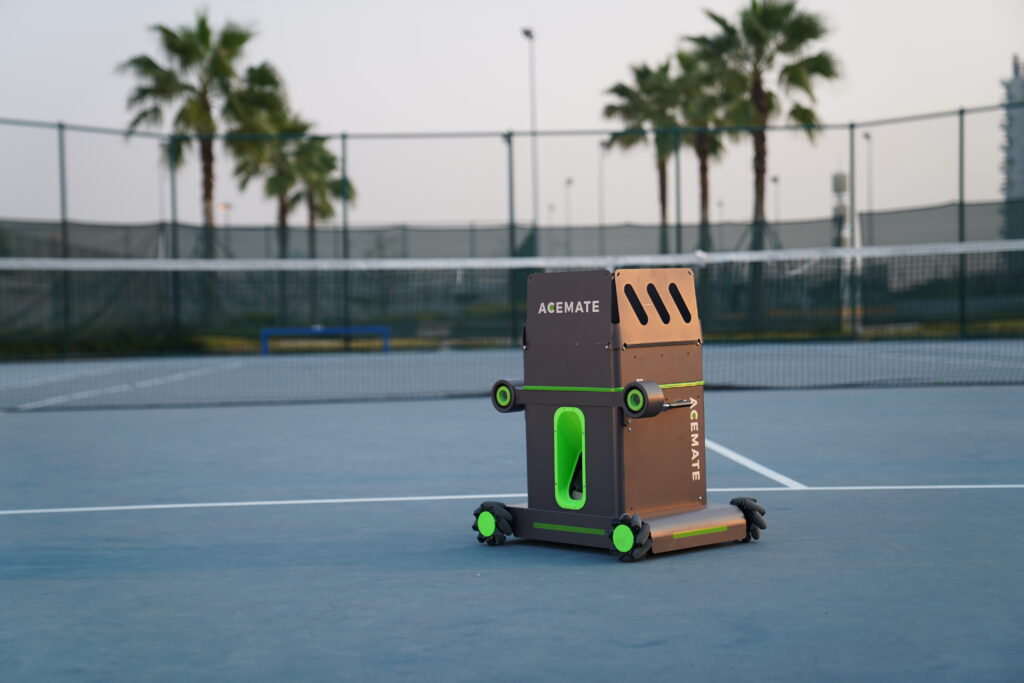
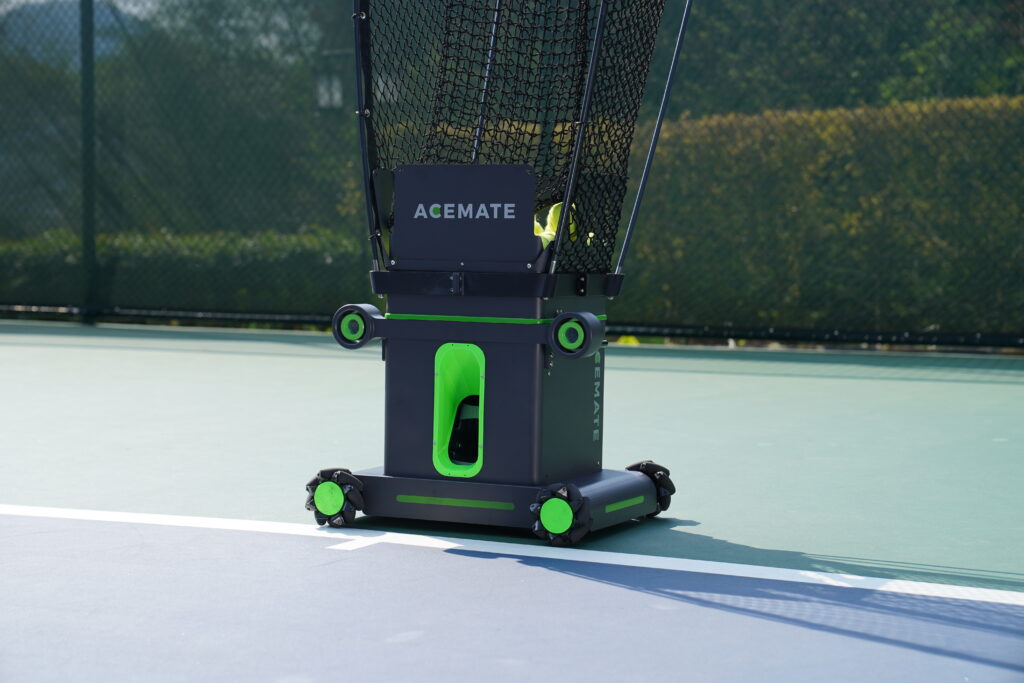
Traditional ball machines stay planted at the baseline. They spit balls, you react. That formula works for repetition, but it does not simulate a rally, Acemate actually moves toward the ball. Using AI vision and real-time tracking, it reads incoming shots and repositions itself across the court. It glides laterally, adjusts depth, and returns balls with varied pace. The effect is subtle yet powerful. You stop grooving one swing pattern and start thinking tactically.
In testing, rallies extended longer than expected. The machine forced footwork adjustments, punishing lazy recovery steps. Not only did it chase the ball, but I could control the increments between each routine. I was competing against its movement.
Nearly every player who stepped on court with it described the experience as “fun.” That word matters in training technology. One younger student initially hesitated, worried the robot might suddenly fire a ball at her. That reaction highlights an important coaching note: introduce the machine slowly, demonstrate how it works. Once she understood the rhythm, the fear disappeared. Comfort breeds confidence.
Modes That Feel Purpose-Built
Acemate operates in two core configurations. Rally Mode is where the magic happens. The robot tracks your shots and returns them with varying trajectory and pace. The exchanges feel organic. No two sequences are identical.
Serve Mode shifts the dynamic. The machine delivers full-court serves and lobs, allowing players to focus on return mechanics. The feeds are consistent enough for repetition, yet varied enough to challenge timing.
Switching between modes happens through the companion mobile app. The interface is intuitive. Speed adjustments and drill settings are simple. Setup takes only minutes, you just place Acemate at the baseline then configure it to the court using its cameras and the app.
Compared to high-end static ball machines, Acemate introduces one crucial difference: a response. Most premium machines allow programmable feeds, few react to your shot selection in real time. That distinction elevates this product to an interactive partner.
Engineering That Supports Real Court Performance
Under the hood, Acemate relies on AI-driven tracking and mobility hardware that allows omnidirectional movement. It tracks ball trajectory and calculates return angles quickly enough to sustain rally tempo, so reaction time feels sharp.
The wheels move smoothly across hard courts. On slightly rougher surfaces, traction remains consistent. Battery life supports extended sessions without interruption. During multi-hour testing, performance remained steady.
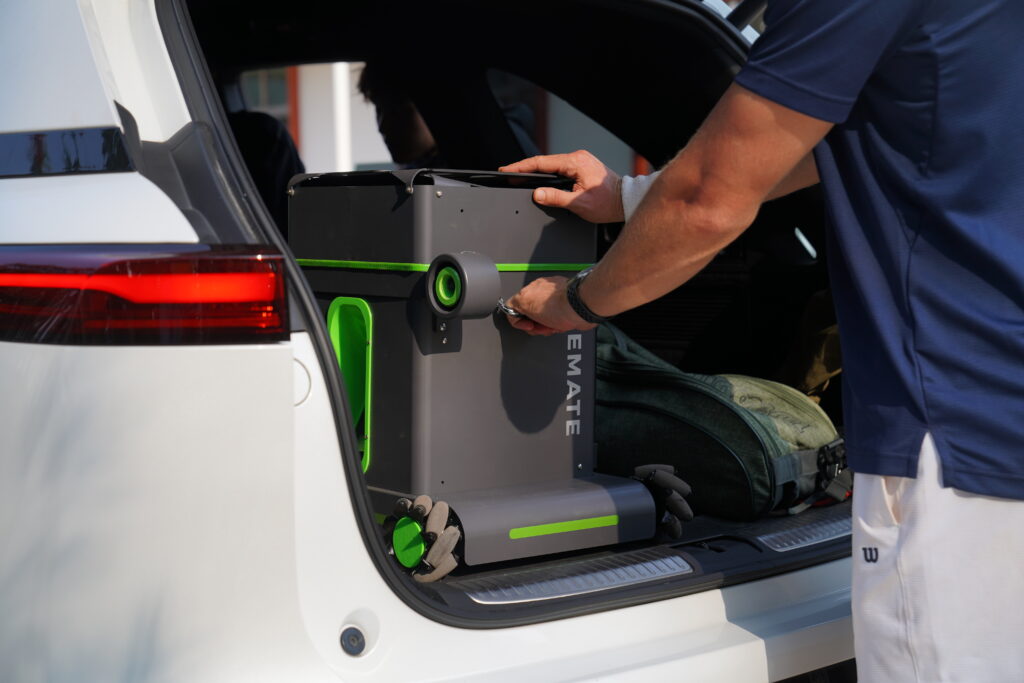
Portability also deserves credit. The unit is compact enough to load into a car trunk. A built-in handle simplifies transport. For coaches traveling between courts or clubs, this detail becomes important.
At $2,499, Acemate positions itself in the premium training category. Compare it to advanced programmable ball machines in the same range, though; many cost similar amounts without offering autonomous mobility. That said, the pricing feels aligned with the innovation.
From a Coach’s Lens
As a coach, I evaluate training tools on three criteria. Do they reinforce fundamentals? Do they keep players engaged? Do they scale across skill levels?
Acemate performs well in each category. Footwork improves because the machine moves. Timing sharpens because returns are not identical. Engagement remains high because rallies feel alive.
With younger players, novelty becomes motivation. With older players, consistency becomes the focus. The robot supports both. Some players appreciate the predictable tempo. However, it does not replace human instruction. It cannot correct grip adjustments in real time, read body language, or provide emotional encouragement. Coaching remains human.
Think of Acemate as a tireless assistant. It delivers repetition and allows coaches to observe while the rally continues. That dynamic adds value in group lessons.
From Wristbands to Rings, Sleep Tech Empowers Elite Athletes
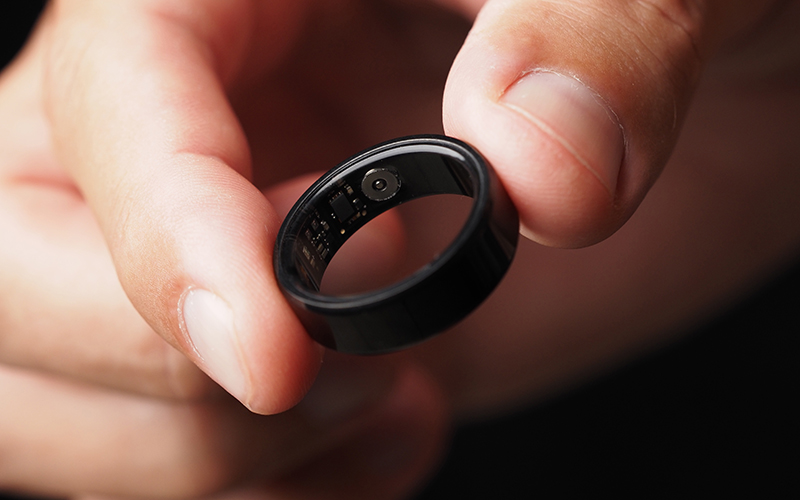
When the stadium lights go dark, professional athletes plug into a different arena—one where heart rate variability (HRV) charts, inflammation scores, and sleep-stage graphs matter as much as the final score. Sleep tracking devices like WHOOP bands and Oura Rings are now as standard as ankle tape… Continue reading
Why It Feels So Different
Technology in sports often fails because it feels mechanical. Acemate succeeds because it feels responsive. That psychological shift matters more than raw specs. When the machine moves toward your angle, you instinctively adjust. When it recovers quickly after a wide shot, you push to return to center. That subtle engagement transforms solo practice.
Instead of feeding balls to a fixed point, you build rallies. Instead of grooving static drills, you rehearse match-like sequences. For competitive players, this is where the robot earns its keep. You train movement patterns under semi-unpredictable conditions. That transcends any plain drill.
Who Should Consider Acemate
Serious solo players will benefit most. Those training without consistent partners will appreciate the interactive element. Coaches managing multiple students can use it as a rally station.
Casual players may find the price steep. Beginners can benefit, but only with proper introduction. Competitive juniors and adult league players likely see the strongest return on investment.
It is also ideal for players who thrive on repetition but dislike monotony. The AI variation keeps drills from feeling sterile.
A Step Toward Intelligent Court Training
The Acemate Tennis Robot represents a meaningful evolution in tennis training and sports technology. It blends AI tracking, autonomous movement, and user-friendly controls into one cohesive platform. Most importantly, it feels alive on court.
While it is an investment, the mobility and responsiveness justify the premium when compared to traditional machines. It does not replace coaching, nor does it fully replicate a human opponent, but it narrows the gap more than any other machine.
For players who value purposeful solo sessions, and for coaches seeking a modern training assistant, Acemate delivers innovation that translates into movement, engagement, and measurable improvement. Practice finally comes to life.