


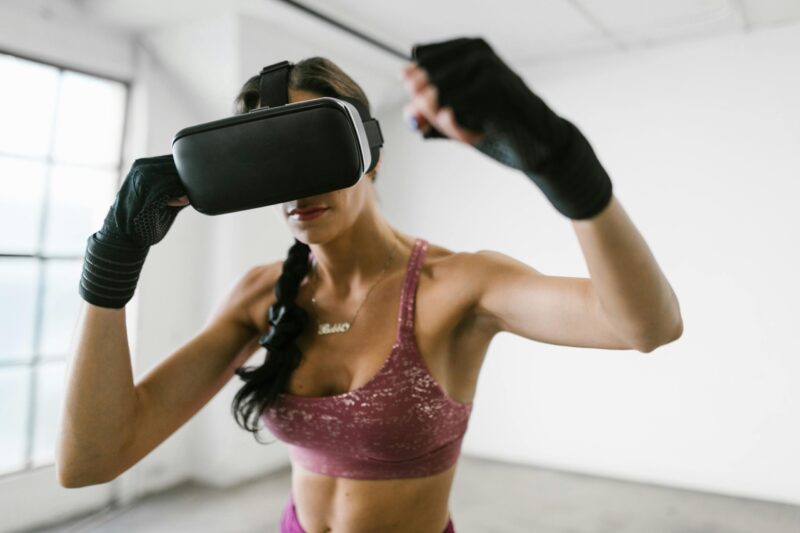
In recent years, the sports and fitness industries have undergone a significant transformation, driven largely by the integration of technology into workout routines, sport-specific training regiments and overall health-and-wellness practices. From highly-personalized workout plans and virtual fitness coaching to wearable technologies that track everything from pulse and heartbeat to steps taken while running, walking, biking or climbing, the fusion of technology and fitness has created a bold new era of exercise.
Established companies and innovative startups alike are capitalizing on this trend, creating an ever-expanding market of tech-driven applications, devices and solutions. As the world looks ahead toward the second quarter-century of the millennium, it’s a trend that is poised to continue growing, evolving and flourishing.
The Rise of the Smart Fitness Device
Major household names within the sports fitness industry, including Fitbit, Apple, Garmin, Whoop and others have created everything from watches, smart phone apps, armbands, rings, skintight GPS vests and chest straps that track everything from daily steps and heart rate variability to blood pressure, oxygen intake, exercise monitoring, even sleep patterns.
The Apple Watch, for example, has evolved far beyond its initial function as simply a fitness tracker., having integrated more sophisticated sensors, enabling users to track a wider variety of metrics, providing data can be incredibly empowering for users, offering insights into their physical well-being and encouraging healthier habits.
Fitbit has also embraced the latest trends with devices that include advanced sensors capable of monitoring stress levels and providing guided breathing exercises, helping users track not only their activity but also monitor and support their mental health, as well.
As the market for such products continues to expand, smaller startups are joining the party. Boston-based fitness Whoop, for example, delivers real time athlete performance, recovery and sleep feedback without the use of a display screen to deliver personalized recommendations aimed at optimizing users’ health. “Our goal is to help athletes perform at their highest level, every day, using data to prevent overtraining while optimizing recovery,” says Whoop CEO, Will Ahmed.
Use Biohacking to Beat Burnout
Reflection and recovery is crucial to a healthy psyche and body. Everyone struggles with this balance, from part time hustler to CEO of a multinational corporation. I can speak from … Continue reading
Fitness at Home
While COVID-19 shuttered many industries and put the brakes on public gatherings, heavily impacting health clubs, personal training professionals and group sports activities, companies that either pivoted to or created products designed specifically for remote fitness have thrived, paving the way for a fitness-at-home generation which continues to flourish well into 2025 and beyond.
Peloton, for example, took full advantage of the lockdown to create a multi-faceted platform which now offers everything from yoga and strength training to meditation and running classes. The company’s live-streamed and on-demand workouts have built a loyal following, creating a community of fitness enthusiasts who can exercise together, regardless of geography.
Michigan-based MaxPro, which originally designed it’s “gym in a bag” as a travel workout companion, reaped global benefits when the world shut down just two months following the company’s formal launch at CES in January 2020. “While our product was initially designed so users could reap the benefits of a full workout without access to an actual gym, when Covid struck, demand for our product skyrocketed,” said Maxpro CEO, Nezar Akeel. “With gyms closed worldwide, people were desperate for effective at-home fitness solutions, and the pressure to deliver quickly was intense.”
MaxPro is another connected fitness device that allows users to record every movement from speed, velocity, resistance, power use and workout tracking results over time. It’s innovation lies in the ability to communicates bi-directionally with basically every other product in the marketplace, fitting seamlessly into the fit tech ecosystem. The tracking and monitoring utilizes AI as a big part of the equation. “Our AI Avatar ‘MAX’ brings both personality and a full lineup of benefits to the user,” Akeel said. “MAX is a friendly, helpful and supportive coach that gives context to data. The user can ask ‘How did I do this week?’ or ‘Can you recommend a workout?,’” and MAX will provide the solution.”
New York-fitness startup, Amp, is following Maxpro’s lead, integrating AI into its strength-training system to deliver real-time adaptive workouts. Its single-arm resistance device adjusts load and form using algorithms that track performance and fatigue metrics. “With Amp, we’re not only measuring reps, we’re learning from them,” said company spokeswoman Jamie Chen. “Our goal is to ensure every user gets a workout that feels tailor-made, safe, and maximizes progress.”
Fitness Tech Goes Global
While U.S. companies appear to be leading the charge, fitness tech innovations expand well beyond North America. Several international startups–many from Japan and Korea–will introduce new AI and big-data driven sports-and-fitness products at CES 2026 while companies such as Jaxjox (from Canada), WSC Sports (Israel), and Freeletics (from Germany) are bringing their own highly-specialized creations to market, showing how deeply entrenched fitness technology has become on a worldwide scale.
These and other innovators appear to be just the tip of the iceberg. They show how the integration of technology into the world’s global fitness environment will continue to empower individuals to take control of their own personal fitness journeys. This technology is providing health and wellness with insights, motivation, guidance and data every step of the way.