

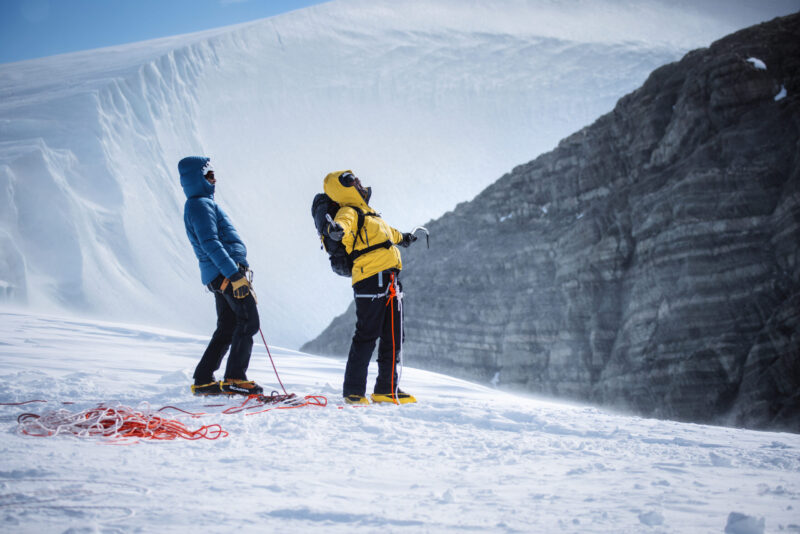
Five years in the making, National Geographic’s Pole to Pole with Will Smith follows Will Smith across all seven continents in one of the most ambitious expedition series ever produced. Over 100 days, Will travels from the ice fields of Antarctica to the jungles of the Amazon, the mountains of the Himalayas, the deserts of Africa, the islands of the Pacific, and finally the icebergs of the Arctic. He pushes his body, curiosity, and courage to the limit.
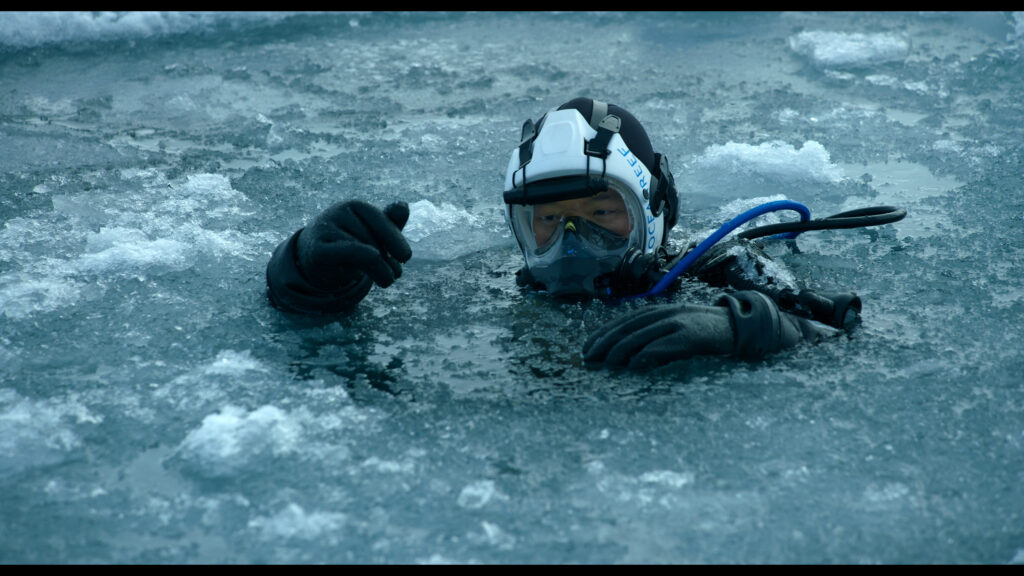
Inspired by his late mentor to explore life’s biggest questions, Will throws himself into extraordinary challenges: skiing to the South Pole, catching a giant anaconda, milking a venomous tarantula, scaling towering mountains, and diving beneath the frozen ice of the North Pole. Along the way, he is guided by world-class experts, scientists, and explorers who help unlock world-first scientific discoveries while forging profound human connections. From the Waorani community in the Amazon to the San people of the Kalahari, Indigenous knowledge and resilience offer powerful insights into humanity’s future on a changing planet.
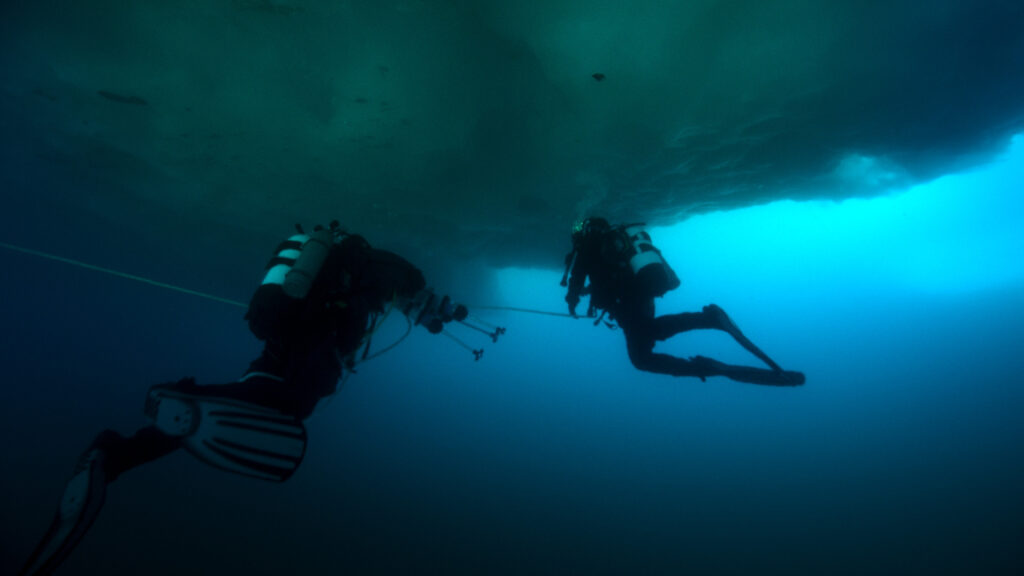
Told with the cinematic scale, access, and authenticity that only National Geographic can deliver, the series delivers cutting-edge science, environmental storytelling, and bold exploration. Nowhere is that fusion more striking than in the episode titled “The North Pole,” where a groundbreaking scientific discovery unfolds in real time beneath Arctic ice.
In the episode, Polar Ecologist Dr. Allison Fong uncovers remarkable new insights into Arctic phytoplankton like microscopic organisms capable of photosynthesizing and retaining energy far longer than previously believed. This discovery is critical because changes in phytoplankton serve as an early indicator of how the planet may respond as polar ice melts, offering scientists a powerful predictive tool for Earth’s future.
Behind the scenes, capturing this moment required unprecedented innovation in imaging, production design, and adaptability under extreme conditions. Innovation & Tech Today spoke with Tom Williams, showrunner of Pole to Pole with Will Smith and newly appointed executive producer at Nutopia, to understand how the team captured never-before-seen visuals and achieve an authentic scientific breakthrough at the top of the world.
Innovation & Tech Today: What camera systems and imaging technology were required to capture reliable footage beneath the Arctic ice at the North Pole, given the extreme cold, low light, and underwater conditions?
Tom Williams: Capturing good images of the micro-organisms was one of the hardest tasks of the entire series. Once we arrived at the North Pole, Alli and Will had to dive under the ice to try to collect the samples—an extraordinarily dangerous feat in itself. Then, because of the micro-organisms’ short lifespans, the clock was ticking to prepare the samples and get them under the microscope.
The big challenge was that microscopic camerawork requires total stillness, but the lab on the icebreaker was crashing through hundreds of miles of sheet ice, shaking the entire boat to its core. The solution the crew landed on was to set up a webcam on the bow of the boat and watch it from the lab, trying to anticipate a break in the ice ahead. Everything had to be ready so we could hit record at exactly the right moment. It worked enough times that we got what we needed.
Love+War Captures the Dualities of Life in Conflict Zones

When Pulitzer Prize-winning photojournalist Lynsey Addario enters a war zone, her camera becomes both shield and confession. For more than two decades, she has documented humanity’s most fragile moments… Continue reading
I&T Today: Allison’s discovery of Arctic phytoplankton capable of prolonged energy retention unfolded in real time. How did the production adapt to document a genuine scientific breakthrough rather than a pre-scripted moment?
TW: The basis of the series was creating real scientific expeditions that would strive for world-first discoveries. We worked very closely with scientists like Alli, along with Bryan, Dacher, and Mary in other episodes, before the shoot to research and plan where to go and what to look for.
But you never know exactly what you’re going to find until you get there. That meant we also needed enough time afterward for the scientists to rigorously crunch their data, and for us to authentically tell the story of what they discovered. Nothing about it was pre-scripted; the science led the narrative.
I&T Today: Did filming at the North Pole require you to invent or customize any camera rigs, housings, or imaging workflows that hadn’t been used before in documentary filmmaking?
TW: Believe it or not, we tested all the camera equipment for both Poles in an ice cream factory in London. We quickly realized that Will’s diary camera—an iPhone using a dual-cam app—might be the weak link because the battery would die very quickly in super-low temperatures.
Our specialist camera team designed and 3D-printed a bespoke housing to keep the iPhone warm. Unfortunately, it worked a little too well. The first time Will used it, the camera shut down because it got too hot!
I&T Today: From a showrunner’s perspective, how does combining cutting-edge camera technology with first-of-its-kind scientific discoveries, alongside Will Smith, change how audiences engage with climate science and the future of the planet?
TW: Our primary focus is to make the most entertaining show possible. I think that’s important. We want to bring these extreme, remote places to life, places our audience will likely never set foot in themselves.
First, you get an incredible entertainer like Will to live it for real as a “fish out of water.” His humor, curiosity, and vulnerability make it relatable and compelling. Then you pair that with the very best cinematography you can achieve. Once people start to engage emotionally with these faraway places, landing why they matter so much to all our futures becomes much easier.
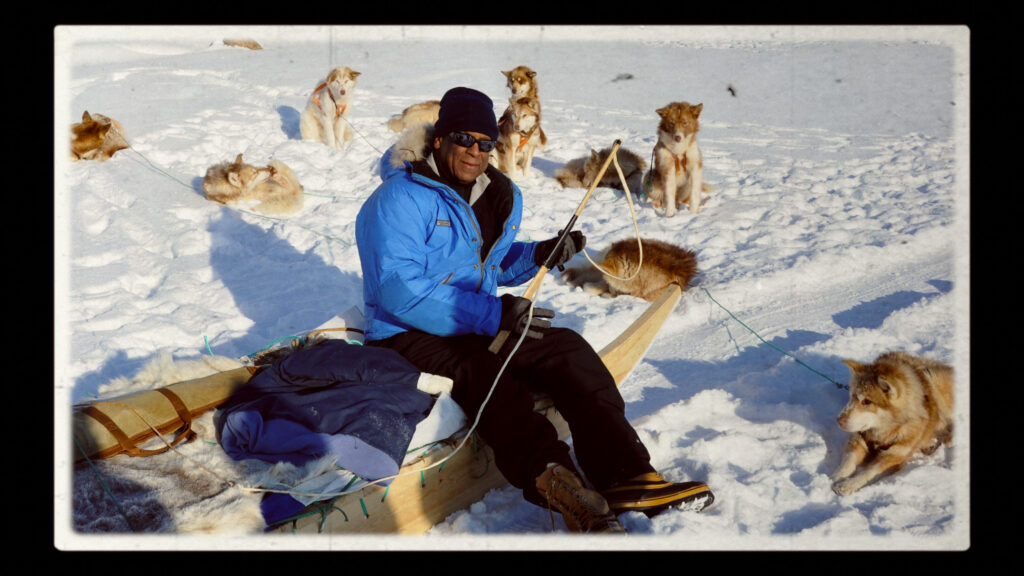
At its core, Pole to Pole with Will Smith reminds us that powerful science doesn’t have to feel distant. While broadcast from the edge of the world, we can experience it firsthand to completely change how we see and understand our planet.