


As we all know, CES is the world’s largest gathering of professionals from across the entire technology ecosystem. Each year, the biggest names in consumer tech converge on Las Vegas alongside thousands of emerging innovators, developers, and startups.
And while that scene reliably unfolds every January in America’s most notorious playground, that’s where the similarity ends.
Why? Because every year, CES is different.
Sure, each year, the show includes pavilions or “pods,” exclusively dedicated to specific areas of consumer technology—digital heath, fintech, smart communities and space tech are among the many topics and themes. But each year, it appears, certain areas of focus tend to emerge that are specifically timely, ideally reflecting the trends and market demands of that particular year.
The early 2000s, for example, saw the emergence of high-definition audio and video; 15 years ago, ipads, tablets and e-readers captured the limelight; while the mid-2010s marked the emergence of smartphones, apps, and the expansion of Wi-Fi networks that transformed how people interact with information, paving the way for today’s era of IoT. Only recently, the world’s fascination with autonomous vehicles appeared to take center stage.
As we look ahead to CES 2026 in a few weeks time, a number of new, emerging trends appear to lay the foundation for the next generation of consumer fascination, concepts and, of course, products.
Artificial Intelligence as the Baseline
Without question, what IoT was to the late 2010s, the absolute buzzword of the 2020s is AI… Artificial Intelligence. And we’re no longer simply talking about chatbots, personal assistants or machine learning, as AI today is the primary platform that drives most of the high-profile innovations at CES 2026.
For example:
- Next-generation laptops, smartphones, and wearables deploy AI to provide original content creation, language translation, security, health maintenance and fitness support without the need for constant access to cloud-based technology.
- New “AI-native operating systems,” championed by Microsoft’s Copilot+ PC vision and Google’s Gemini integration into Android are examples of such core interfaces.
- AI now serves as digital proxies—organizing calendars, responding to messages, orchestrating devices, and anticipating needs across a broad range of ecosystems.
- Ambient computing environments that fade interfaces into the background: sensors, displays, and voice/gesture interactions create spaces that adapt to users automatically.
And not only have the folks who run CES taken notice of such trends, but they have actively and aggressively advocated for them.
CES 2026 Must-See Booths
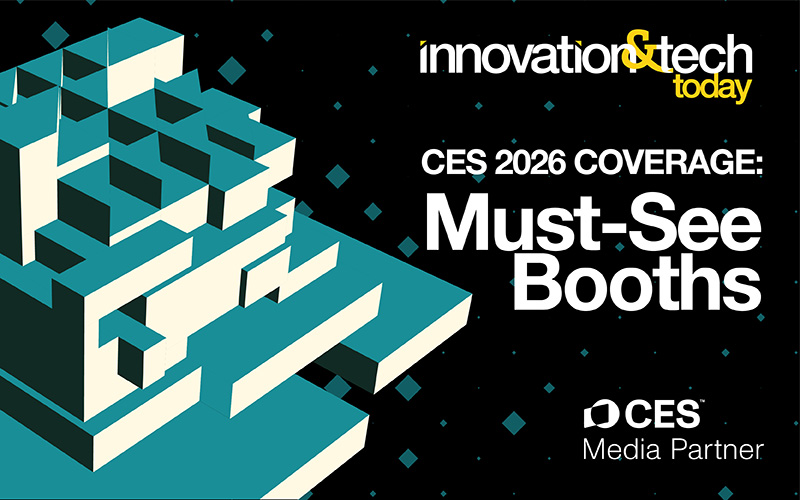
Innovation at CES never ceases to amaze and surprise; however, in this instance, we’re not necessarily talking about the products showcased by the 4,500-plus exhibitors. Instead, we focus on the booths themselves, the “packaging” for those must-see venues… Continue reading
CES Foundry: New Home for AI Innovators
Announced earlier this year at CES Amsterdam, this year’s event will feature the CES Foundry, a dedicated space at the Fontainebleau Las Vegas for startups and entrepreneurs developing AI solutions aimed at addressing global AI challenges, not unlike what the show did in 2015 when they created C-Space a dedicated zone with conference tracks at the Aria Resort for advertising, media, and marketing professionals.
“The Foundry will be home to innovators creating amazing AI technologies that can solve some of the world’s biggest problems,” said Consumer Technology Association President Kinsey Fabrizio. The Foundry will also feature quantum technology, though not yet full-scale quantum computers. “They’re still too big for the show floor,” Fabrizio said; “but we will have companies showing how quantum can be commercialized—from transportation and space to biotech.”
According to Fabrizio, robotics will join AI as among the most dominant show features. “We’re seeing amazing innovation coming from Europe—from the Netherlands, France, Germany, and Italy—and we’re very excited to see what’s next at CES 2026,” she said. “AI and robotics will be central themes, both on the enterprise and consumer side.”
Robotics on the March
We’ve all seem the development of robotic devices, from self-motorized lawnmowers and vacuum cleaners to surgical assistants but this year’s trends will focus more on industrial robotics and humanoid robots for consumers.
“On the enterprise side, robotics in manufacturing continues to evolve,” Fabrizio said, referencing Siemens’ digital twin concept, which integrates AI and robotics to create a virtual replica of a manufacturing environment. “We’ll see more of this convergence between physical and digital at CES.”
But it’s the consumer robotics segment that Fabrizio finds particularly exciting. “Humanoid robots in the home can do your laundry, cook, clean, and learn what your home needs—that’s really where innovation is heading. And we’ll start seeing early examples of these complex home robots at CES.”
Other Trends To Watch
The other leading trends to expect this year are Automotive Tech, Health Tech and Human Wearables, Immersive Entertainment and Intelligent Energy.
- Widely hailed as the second largest auto show in the nation (behind Detroit, of course), automakers will showcase everything from advanced driver-assistance and autonomous systems that are, yes, nearly finally ready to hit the market.
- Health and wearables will focus on smart watches and fitness devices that are integrating next-wave sensors for more accurate biometrics and deeper health insights.
- Mini-LED and Micro LCD technologies, pioneered by such legacy companies as Samsung, Sony, LG and others, promise brighter, more energy-efficient screens with richer color fidelity.
- Finally, Sustainability is more than just a buzzword at CES; rather it’s becoming embedded in product design and systems including AI-powered energy management for homes and smart grids. Electric vehicles will also be highlighted as will consumer electronics designed to increasingly incorporate recycled materials, efficient chip designs, and lifecycle carbon monitoring and flexible, renewable energy solutions.
Don’t Forget the Startups!
While the big boys will capture much of the attendee and media attention at CES, more than 1,400 new and emerging companies—headquartered in Eureka Park at the Venetian—will show the world both the vision and trends of future innovators. A pavilion designed for emerging companies in their earliest stages of product development and production, Eureka Park is the home to visionaries and futurists, who see what tomorrow’s technology could be, while taking their own personal steps to get there.
All of which, combined, should result in another wild ride next month at CES 2026.
So, as much as things tend to change year after year at the world’s largest gathering of technology innovators, one thing is for certain: some elements still remain the same!