


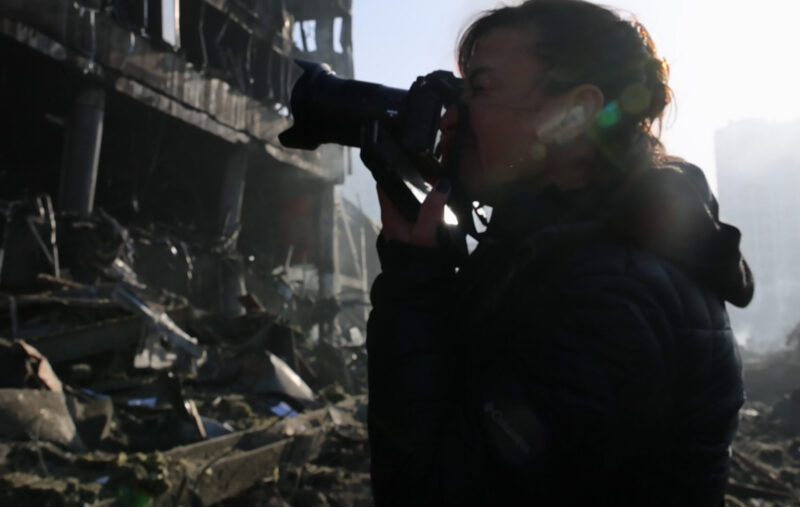
When Pulitzer Prize-winning photojournalist Lynsey Addario enters a war zone, her camera becomes both shield and confession. For more than two decades, she has documented humanity’s most fragile moments: women giving birth amid rubble, soldiers saying goodbye to the fallen, families displaced yet holding on to hope.
A captivating new documentary shows her mission, her life behind the scenes, and where they intersect. In the National Geographic film, Love+War, by Oscar-winning filmmakers Elizabeth Chai Vasarhelyi and Jimmy Chin, Addario reflects on over two decades of covering conflict, and the personal battle between documenting war and leaving her family.
“I’ve been approached over the years to do documentaries or even fictional versions of my life since my memoir came out,” Addario said. “But nothing really felt right. I wasn’t interested in being the subject until I saw Jimmy and Chai’s work about someone driven, at all costs, to do what he believed in. I could relate to that.”
Timing Means Everything
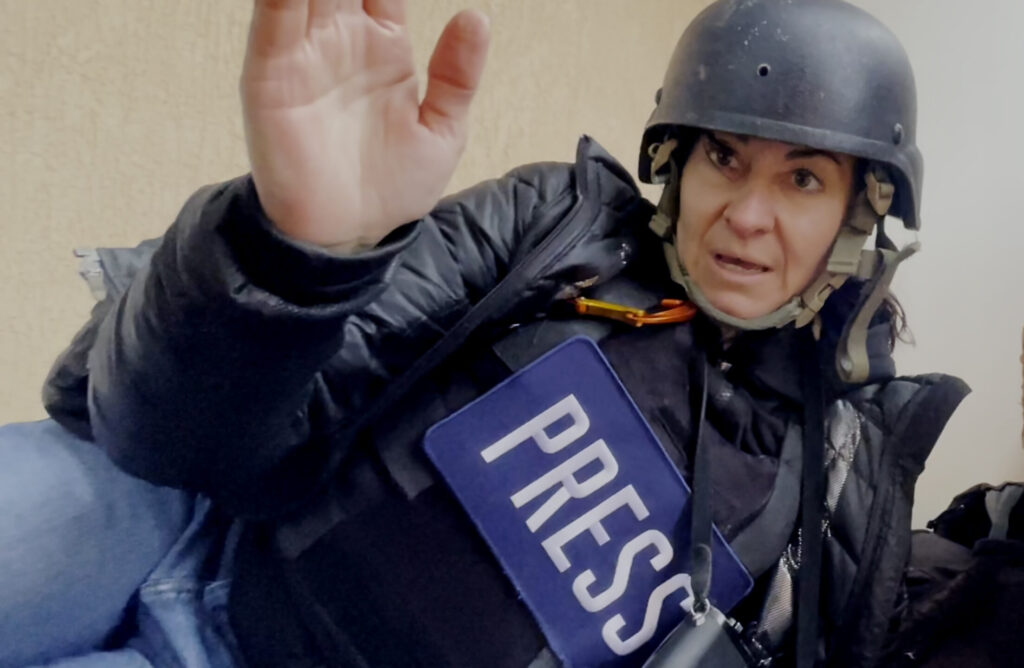
Her photographs from Afghanistan, Iraq, Libya, Darfur and Ukraine have earned her acclaim both for her eye and for her empathy. Now, in Love+War, the lens turns toward Addario herself.
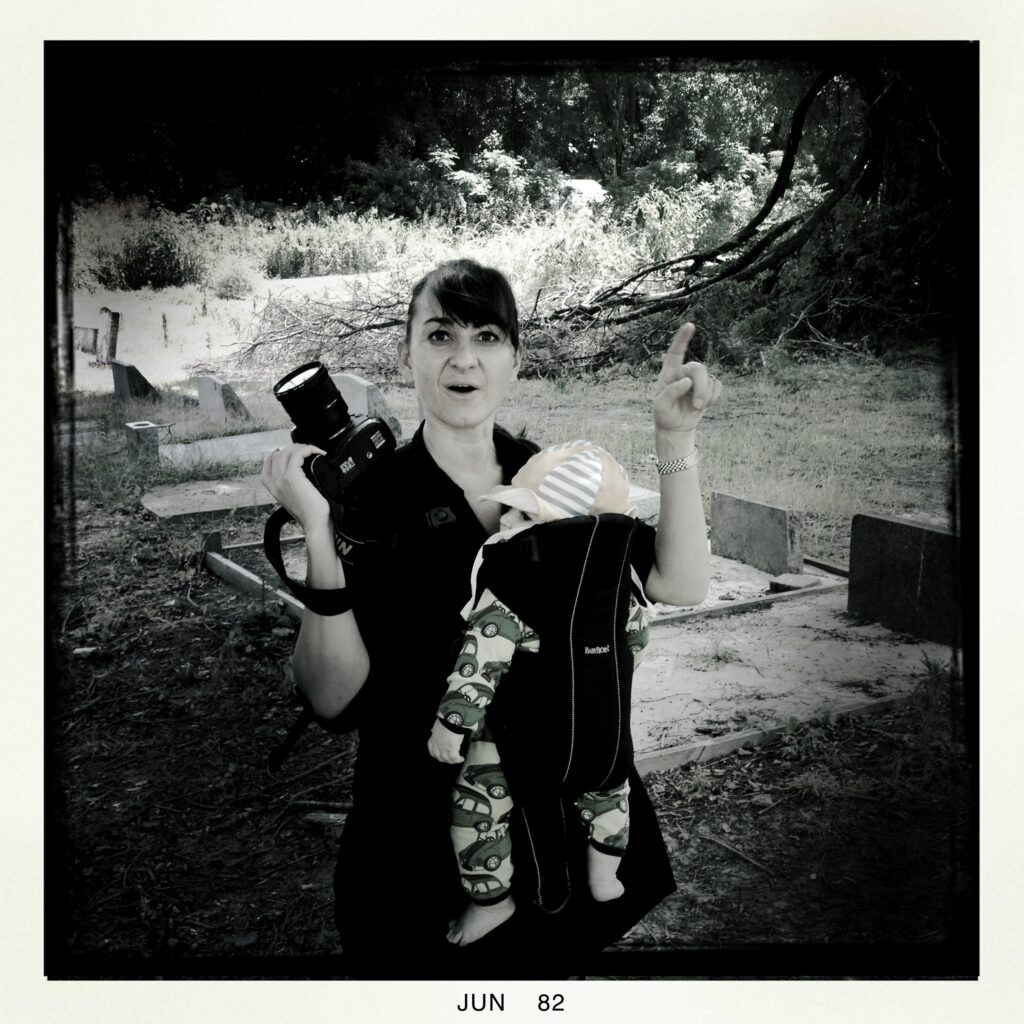
Addario said her decision was as much about trust as timing. “I’ve been doing this work for more than 20 years, and I kept seeing men in the protagonist role,” she said. “I thought maybe it’s time to feature a woman, to show young women that it’s possible to do this job and have a family. It’s messy, it’s hard, it’s exhausting, but it’s possible.”
That tension between danger and domesticity, vocation and vulnerability lies at the heart of Love+War. The title, she said, wasn’t her idea, but resonated deeply. “For me, love represents my family, and war, of course, my work. But within war itself, you find love: moments of generosity, selflessness and humanity. That juxtaposition is constant.”
The film captures Addario balancing the pull between home and the front lines. Packing gear while her son sleeps, fielding calls from editors while sheltering during airstrikes. It reveals the external conflict zones she inhabits alongside the personal ones she carries with her.
Asked if she still believes love conquers all, Addario paused. “I think humanity conquers all,” she said. “At the end of the day, we all want peace, shelter, safety and the best for our families. Maybe love doesn’t conquer everything, but it’s what keeps us resilient.”
Tools for Bearing Witness
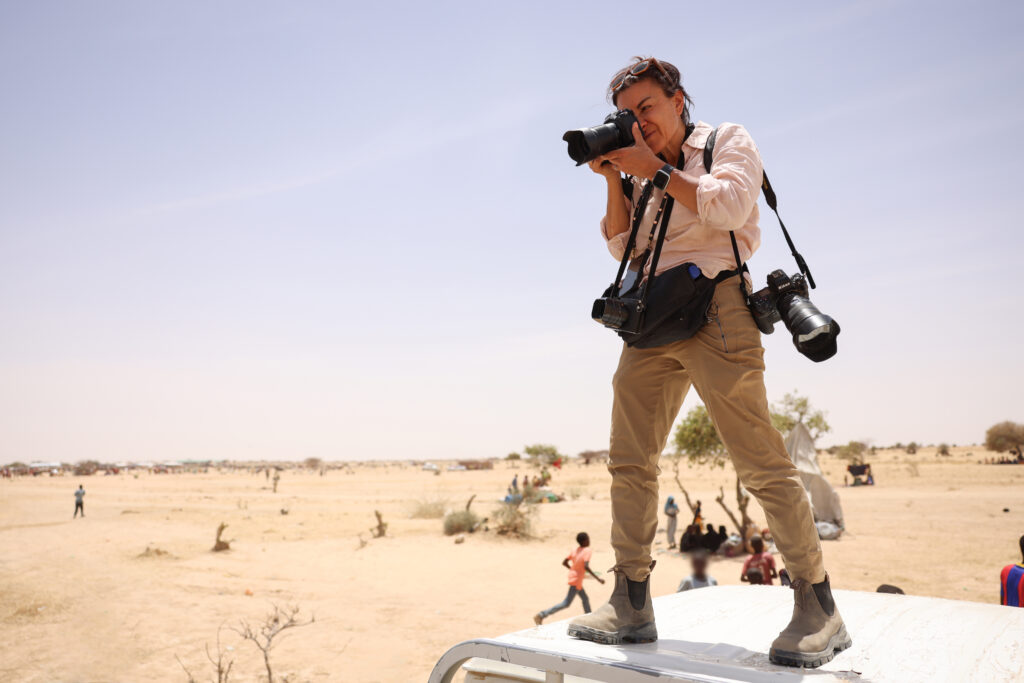
For a journalist who has spent her life documenting history in real time, technology is both ally and obstacle. Addario is a Nikon ambassador and a lifelong loyalist.
“When Nikon went mirrorless, it was a real change for me; in a good way,” she said. “The old equipment was cumbersome. I wanted to go more low-profile, carry less, move faster.”
Her current setup includes Nikon Z 8 and Z 7II bodies, a Leica Q3 for quick moments, and a mix of fixed lenses: 28mm, 35mm, 50mm and 85mm, plus a 28–70mm f/2.8 zoom and a 70–200mm “in case there’s a missile strike.”
Portability and durability are constant calculations. “It depends on the assignment,” she said. “When I go to Ukraine, I carry most of my kit. Every day I choose what to take depending on what I’m supposed to shoot. You always have to be ready for anything.”
Readiness extends beyond the camera. “I back everything up twice: two solid-state drives, usually two or four terabytes each,” she said. “I keep one in one bag and one on me, so if something happens, I still have a copy. You can’t let it lapse. What if your camera’s confiscated? You’re constantly thinking about contingencies.”
Her workflow combines discipline and instinct, downloading files in the back of a car while leaving the front lines of a dusty area with no electricity. Keeping gear in motion, sometimes filing from regions where connectivity barely exists.
“When I started 25 years ago, there were hardly any cell signals,” she said. “Now it’s rare to be completely off-grid. But we still carry satellite phones, Iridium or BGAN, depending on the region. We use Signal, Telegram and WhatsApp. The level of encryption keeps changing, so you have to adapt.”
BioRescue Leads White Rhino Conservation Efforts in The Last Rhinos: A New Hope

The Last Rhinos: A New Hope premieres on National Geographic on August 24, then streams on Disney+ and Hulu on August 25. In this hopeful but tense film, photographer Ami Vitale follows a global effort to save the Northern White Rhinoceros, one of the most endangered species… Continue reading
Truth in the Age of Fakes
In an era of artificial intelligence and deepfakes, Addario’s commitment to authenticity has never felt more urgent.
“Journalism is under attack anyway,” she said. “Now we have AI-generated images, and people take them at face value. It just makes our lives more complicated. I risk my life to get these pictures, and then people can sit at a computer and make something fake that looks real. It’s frustrating.”
The irony is clear: technology has made her job both easier and more precarious. While she embraces digital photography, she acknowledges what’s been lost in the process.
“With digital, I definitely overshoot,” she said. “I’m less judicious. But I’m grateful. It’s freed us in so many ways.”
Between the Frame and the Fire
Still, Addario keeps a few analog tools in her kit. “Sometimes I bring a Wide Lux film camera or another panoramic film camera,” she said. “Not often, but occasionally. It reminds me where I came from.”
In Love+War, Addario’s life unfolds not as a myth but as a mosaic: wife, mother, journalist, witness. The film doesn’t romanticize her work, it humanizes it. Viewers see her rush toward chaos with quiet resolve, camera pressed against her face, and later, at home, wrestle with the guilt of leaving again.
For Addario, the story is less about her, and more about what remains. “I keep going back because I believe in showing people what’s happening,” she said. “There’s always a human side, even in war. Especially in war.”
Perhaps what Love+War captures best is more than a portrait of a fearless photographer, a woman who feels deeply and still pursues her true calling. Her images may not be proof that love conquers all, but that love persists even amid conflict.