

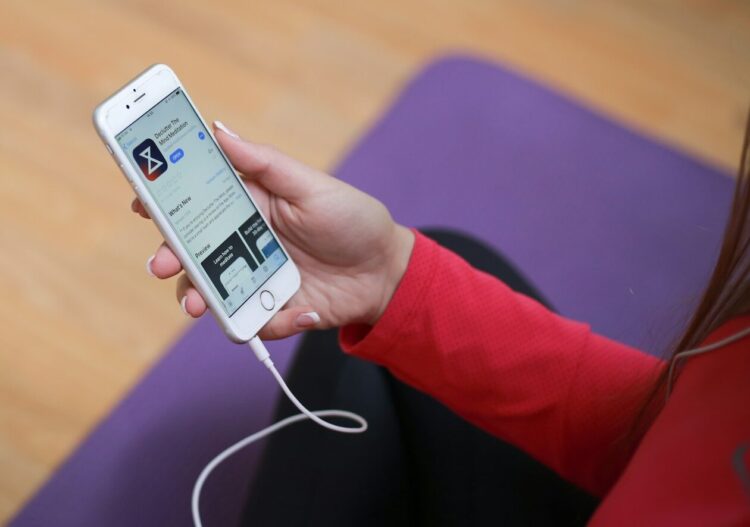
Some apps help you identify plant species through advanced object recognition, while others jazz up your selfies with augmented reality filters. Then there are a few borderline medical miracles that claim they can tell if that mole on your shoulder is something to worry about. If it sounds too futuristic for a phone to pull off or you’ve already downloaded one of these apps and aren’t sure whether to trust it, you’re not alone. Artificial intelligence (AI)-powered health apps are trending fast, but how accurate are they?
Skin Cancer Detection in the Palm of Your Hand
Skin cancer is the most commonly diagnosed cancer in the world, but the good news is early detection can make a world of difference. That’s where these apps come in. They use artificial intelligence trained on thousands of pathology images to analyze photos of your skin and decide whether something on your skin is low or high risk. While the use of AI to detect skin cancer is relatively new, studies have shown it can recognize cases with high accuracy, significantly advancing the future of medical science.
In a Dutch pilot study, 50 patients used a skin cancer detection app under real-world conditions. Out of 35 patients with benign lesions, the app correctly labeled 28 as low risk. That’s an 80% accuracy for truly negative cases. Out of 10 with premalignant lesions, it correctly flagged nine as high risk for an impressive 90.9% sensitivity.
That’s a solid performance for a consumer app. But before you get too confident in your smartphone’s diagnostic prowess, there are a few caveats.
Impressive Stats, Not a Silver Bullet
A 90% success rate in catching concerning lesions sounds great until you’re the unlucky 10%. The American Cancer Society shows that melanoma — one deadly form of skin cancer — is expected to claim 8,430 lives, 10% of which is still over 800 people. These apps aren’t perfect, and it could mean missing an early diagnosis when they get it wrong. That’s why accurate numbers — while promising — need context.
In the same Dutch study, more than half of patients who got a low-risk result said they would skip visiting their general practitioner. That’s efficient if the app is right, but if it’s not, that’s a problem.
Interestingly, GPs using the app didn’t change their diagnoses based on it, but in five cases, they did change their treatment plans. That included one unnecessary excision and two more aggressive responses to pre-cancerous lesions. The bottom line is that even if the doctor doesn’t change their mind, the app can still influence what they do.
Tech Glitches and Human Hiccups
Smartphone apps don’t work in a vacuum. You are a big part of the equation, and this is where things get tricky.
Patients who can use the app may not have difficulty accessing the tech, but those with hard-to-reach lesions or lacking confidence may need assistance. That’s a usability problem for a self-screening tool. The dream of snapping a quick mole pic and getting instant medical-grade feedback may not be quite there yet.
Activate the Immune System with Avatars

The “fight-or-flight response” that is so vital to survival has come into play for a scientific study based in Switzerland. The catch: the threat is simulated and processed in an anticipatory way inside the brain… Continue reading
Not All Algorithm Training is Created Equal
Melanoma is 20 times more common in fair-skinned individuals compared to those with darker complexions. The numbers show it affects about one in 38 white individuals, compared to one in 167 Hispanic people and one in a thousand Black people.
The figures show more cases among fair-skinned individuals, which contributes to another issue. Most AI systems are trained on those lighter skin tones, and this lack of diversity in training data is a serious red flag.
In addition, digital pathology — where these apps get a lot of their training data — is still only adopted in about 5% to 10% of the medical field. While it may be possible to scale to a higher adoption rate in the upcoming years, this obstacle needs to be addressed to ensure equity and equal representation in patient data. So, if your skin isn’t pale and easily photographable, the app might not be playing with a full deck of cards right now.
A Step Forward, Not the Final Diagnosis
These mole-checking apps aren’t the only AI tools shaking up the diagnostics space. One AI-powered digital cytology system recently received FDA clearance to detect cervical cancer. It reportedly reduces false negatives for high-grade lesions by 28%.
Meanwhile, another healthcare AI startup received FDA clearance for its full-body scan tech, aiming to offer 15-minute, $500 MRIs as early as 2026. These tools show how AI is rapidly integrating into medical diagnostics and why more people should keep a close and critical eye on it.
Should You Trust a Skin Cancer App?
Here’s a final rundown of the facts of the matter:
- The accuracy is promising: That Dutch study showed 90.9% sensitivity for concerning lesions and 80% specificity for benign ones.
- Usability is a hurdle: Users may need help, especially older adults or people trying to photograph hard-to-reach spots.
- Equity is a concern: Most training data is based on white skin, meaning results may not be as reliable for people with darker skin tones.
- AI influences decisions: Even if it doesn’t change your doctor’s diagnosis, it can still affect treatment plans.
- You still need a doctor: No matter how advanced your phone is, it can’t replace medical judgment or a dermatoscope.
From Selfie to Safety
These apps can be helpful, especially when used alongside professional care, but right now, they’re better at triage than diagnosis. Use them as a conversation starter with your doctor. If something looks new, weird, or changing on your skin, take the photo and follow it up with a visit to an actual human. While AI can help you spot something, it still takes a trained professional to treat it.