


Carbon monoxide has no taste, color, or smell, which is what makes it so dangerous. Families often realize there is a problem only after someone feels unwell.
A child wakes with a headache. A pet seems unusually tired. The signs are easy to mistake for something else, allowing small leaks to linger long enough to matter.
Children and pets face greater risk. They breathe faster and have smaller bodies, so low-level exposure for one person can add up quickly for another. A toddler asleep down the hall or a cat near a space heater may be the first to show signs. Sources are often routine, such as gas appliances, fireplaces, attached garages, or portable heaters. Even a well-maintained home can develop a fault after a storm or seasonal change.
Detection turns this from a checklist item into an everyday safeguard. Carbon monoxide offers no sensory warning, so the only reliable early signal is an alarm that constantly watches the air. Modern electrochemical sensors make that possible without disrupting daily life. They respond quickly to changes, avoid false alarms from normal activity, and give clear feedback on status, providing clarity that matters when the home is busy and decisions need to be simple.
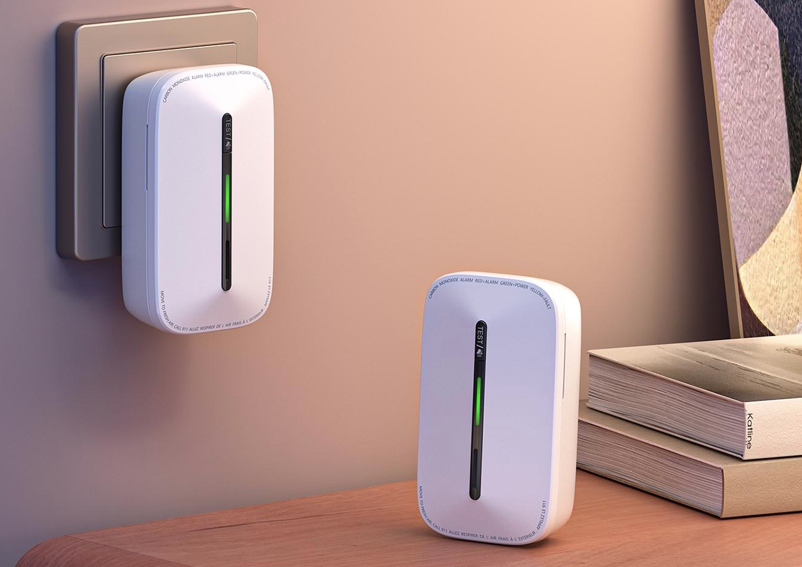
The SITERWELL Plug-In Carbon Monoxide Alarm builds on these principles. It powers up instantly in any standard outlet, and a backup power supply can help the alarm continue to function and provide alerts even if the power is cut off. The same unit can go from a bedroom wall to a hotel, RV, or tent, turning a home device into a travel habit. At home, it works just as seamlessly.
Daily use is quiet. A soft, sleep-friendly indicator shows normal operation without lighting up a room. Green means working, yellow signals a fault or low battery, and red means an alarm and the need to get everyone to fresh air. Testing is simple: press one button, hear the 85-decibel tone, and know it will cut through closed doors, showers, and music.
Placement matters, and the plug-in form helps. Bedrooms and hallways near sleeping areas are high-priority, but living rooms can offer early warning before symptoms appear. For rentals or vacation homes, a plug-in design makes seasonal setup faster. In homes with older adults, the ability to move the alarm without tools is a practical benefit when routines shift.
The unit’s affordability makes it easier to place multiple alarms throughout a home. Extra coverage ensures protection if one device is being serviced or replaced, and it also makes the technology more accessible for renters, students, or parents who want a dedicated alarm in a child’s room. Designed for a 10-year lifespan, it offers long-term reliability without frequent replacements. That reliability matters because carbon monoxide incidents often develop slowly.
Intent is rarely the problem. Awareness is. A dependable alarm covers those edge cases and moments when routines slip. For families with children and pets, that margin of safety is the difference between guessing and knowing.
Travel adds another layer. Many assume hotels or rentals meet code, but requirements vary and compliance can lag. A compact, plug-in alarm with a battery backup removes the guesswork. Pack it with the chargers, plug it in where people sleep, and it continues working if the power fails. The same familiar signals apply in any setting.
Good safety products disappear into the background until needed. The unit uses an electrochemical sensor for accuracy, a loud siren for urgency, and clear visual cues for daily confidence. It installs in seconds, moves easily, and protects during outages. When the air is not safe, it tells you in time to act.
Homes change. People grow. Pets arrive. Appliances age. Carbon monoxide risk shifts with the seasons and with everyday wear. The answer is not fear, but attention. A reliable alarm gives that attention a steady form, and that is what families need when quiet risks share the same rooms as the children and pets they protect.